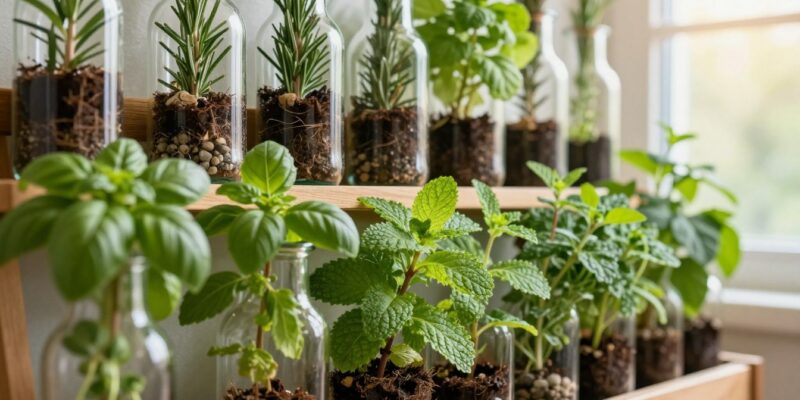
Turn your living space into a green oasis with a simple wall garden. Many city homes have little floor space, but walls offer a smart solution.
Reuse plastic containers to make an efficient diy herb garden with fresh kitchen flavors.
This guide shares a simple six-step process for your green project. You will choose a sturdy surface, prepare containers, and plant your herbs.
You will learn mounting, drainage, and steady watering routines.
Gardeners can learn how to start a bottle herb wall garden project with this guide. We focus on safety and access, so your setup stays useful and beautiful.
Enjoy the satisfaction of harvesting your own fresh herbs right from your wall.
Key Takeaways
- Vertical gardening maximizes small spaces by utilizing wall areas effectively.
- Recycling plastic containers reduces waste while providing durable planters.
- Proper drainage is critical to prevent root rot and ensure plant health.
- Consistent watering schedules help maintain vibrant, productive herbs year-round.
- Labeling your plants keeps your kitchen garden organized and easy to manage.
Plan the Bottle Herb Wall Garden and Gather Supplies
Transforming empty wall space into a lush garden requires thoughtful planning. Creative indoor herb garden ideas can turn recycled materials into useful living art.
Choose a Bright, Safe Wall Location
Your plants need plenty of natural light to thrive. Choose a wall with six hours of daily sunlight, near a south-facing window.
Ensure the wall can hold wet soil and glass or plastic bottles. Mount a vertical herb garden securely to prevent accidents or damage indoors.

Select Herbs That Suit the Light and Space
Not all herbs have the same needs. Choose varieties that match your wall’s light conditions.
- High Light: Rosemary, thyme, and oregano love bright, direct sun.
- Moderate Light: Mint, parsley, and chives grow well in partial shade.
- Space Considerations: Select compact herbs that do not require deep root systems to stay healthy in small bottles.
Collect Recycled Bottles, Potting Mix, Tools, and Mounting Materials
Gathering supplies before you begin makes assembly much smoother. You need a few essential items to build your structure.
Make sure you have the following items ready:
- Clean, empty plastic bottles of uniform size.
- High-quality, lightweight potting mix designed for containers.
- Sturdy twine, wire, or mounting brackets.
- A sharp utility knife or heavy-duty scissors.
- A drill or heated nail for creating drainage holes.
Check Bottles for Cracks, Sharp Edges, and Thorough Cleanliness
Safety matters when working with recycled materials. Inspect each bottle for deep cracks or weak plastic before cutting.
Wash each bottle with warm, soapy water to remove residue. Smooth sharp edges from cutting with a file or sandpaper.
How to start a Bottle herb wall garden project step by step
Upcycling projects for herbs help gardeners grow plants in small spaces. These sustainability projects at home turn plastic containers into useful, pretty vertical gardens.

Step One: Wash, Cut, and Prepare the Recycled Bottles
First, wash each plastic bottle well to remove all residue. Cut a large rectangular opening in one side for planting.
Sand or Cover Cut Edges to Prevent Hand Injuries
Cut plastic edges may feel sharp. Smooth them with sandpaper or cover them with colorful duct tape for safer future care.
Step Two: Create Drainage Holes and Airflow Openings
Healthy roots need good drainage. Poke several small holes in each bottle’s bottom, letting extra water escape.
Keep Drainage Water Away From Walls and Flooring
For indoor walls, place a small tray or gutter below the lowest bottles. This keeps water from harming walls or floors.
Step Three: Fill Each Bottle With a Lightweight Growing Mix
Heavy soil can weigh down your vertical garden. Choose a light, airy mix that helps roots grow and stops soil from packing.
Combine Potting Soil With Compost and Perlite for Better Drainage
Mix potting soil with plenty of perlite and organic compost. This blend feeds herbs and keeps air moving around their roots.
Step Four: Plant Herbs Using Space-Appropriate Techniques
Think about each herb’s adult size before planting. Give every plant room to grow without crowding nearby plants.
Plant Basil, Parsley, Cilantro, Mint, Thyme, and Chives at Suitable Depths
- Basil and Cilantro: Plant these about 1/4 inch deep.
- Parsley and Chives: Sow these seeds or starts at a depth of 1/2 inch.
- Mint and Thyme: These hardy herbs prefer shallow planting to establish roots quickly.
Step Five: Secure the Bottles in a Stable Vertical Arrangement
Use a sturdy frame or heavy-duty wall hooks to mount the bottles. Tilt them slightly outward to catch natural light and rain.
Use Strong Fasteners and Leave Room for Plant Growth and Watering
Secure bottles with zip ties or strong twine. Leave space between rows for easy watering and harvesting.
Step Six: Water, Label, and Position the Finished Herb Wall
After assembly, gently water your herbs. Good organization helps you care for these sustainability projects at home.
Label Each Herb and Rotate Bottles for Even Sunlight
Use waterproof markers to label every bottle and identify herbs quickly. Rotate bottles when sunlight differs, helping all plants grow evenly.
Care for the Garden and Solve Common Problems
Daily habits can turn your DIY project into a lasting success. A steady routine can create one of the most creative herb garden designs at home. Regular care keeps your plants healthy and productive through the growing season.

Use a Simple Watering and Feeding Routine
Vertical gardens dry faster than regular pots because they hold less soil. Check the top inch daily; gently water dry soil without causing overflow.
Feed your herbs with balanced, water-soluble fertilizer every few weeks during peak growing months. This step-by-step herb garden guide recommends half-strength doses to protect delicate herb roots.
Prune Herbs for Fuller Growth and Regular Harvests
Prune often to keep your wall lush and compact. Snip harvested herbs just above a leaf node to prevent sparse growth inside recycled bottles.
Frequent harvesting also stops plants from flowering too early. Pinch off new flower buds to keep the wall tidy and preserve flavorful leaves.
Prevent Root Rot, Mold, Pests, and Leggy Growth
Overcrowding and poor airflow can make vertical gardens weak and yellow. Excess moisture or low light may cause this; add drainage holes to stop pooling.
Adjust Light, Drainage, and Watering Before Plants Decline
Leggy herbs stretch toward light; move them brighter or add a small grow light. Early action protects your investment and keeps the garden thriving.
| Problem | Likely Cause | Immediate Solution |
|---|---|---|
| Yellowing Leaves | Overwatering | Reduce frequency and check drainage |
| Leggy Stems | Insufficient Light | Relocate to a sunnier wall area |
| Mold on Soil | Poor Airflow | Increase ventilation and reduce humidity |
| Wilting | Underwatering | Water thoroughly and monitor daily |
Conclusion
A vertical garden makes empty wall space a useful source of fresh ingredients. You can grow basil, parsley, cilantro, mint, thyme, and chives in your kitchen.
These six herb planting techniques offer a clear path to success for any indoor gardener.
Recycled containers help your plants thrive. Secure mounts and steady drainage keep your setup healthy and stable over time.
These tips help reduce waste while you enjoy a harvest of flavorful greens.
Small spaces gain much from these eco-friendly gardening tips for urban agriculture. Adjust your light exposure and watering schedule for your home’s specific needs.
Watch your wall grow as you make these simple habits part of daily life.
Share your progress with friends or neighbors to inspire their own projects. Your new herb wall serves as a useful piece of art that brings nature indoors.
Start your journey today and enjoy the rewards of a sustainable, home-grown kitchen garden.
## FAQ
### Q: What is the best way to begin a bottle herb wall garden project?
A: Start by choosing a sunny wall with at least six hours of light. Gather clean recycled 2-liter bottles and prepare a safe mounting system.
This rewarding home sustainability project gives plastic waste new life and fresh kitchen ingredients.
### Q: Can these indoor herb garden ideas work in a small apartment?
A: Definitely! A vertical herb garden suits urban dwellers with limited floor space. Use your wall to grow basil and mint without cluttering counters.
These herb upcycling projects stay compact, light, and easy to maintain indoors.
### Q: Where can I find a reliable step-by-step herb garden guide for construction?
A: Follow six simple steps: wash and cut bottles, create drainage, and add high-quality mix. Then plant herbs, mount bottles securely, and set a watering routine.
A clear guide also covers safety. Before planting, sand sharp plastic edges with a Fiskars utility tool or sandpaper.
### Q: What are some creative herb garden designs to make the wall look better?
A: For a polished look, paint bottle exteriors with Krylon Fusion for Plastic. This matches home decor and protects herb roots from direct UV exposure.
Arrange bottles in a geometric grid or staggered “waterfall” pattern for living art.
### Q: Which herb planting techniques ensure my plants stay healthy in small containers?
A: Success depends on soil and spacing. Use a lightweight potting soil and perlite blend to keep bottles from becoming too heavy.
Plant parsley, cilantro, or chives without burying their crowns too deeply. Eco-friendly gardening tips include adding a layer of Espoma Organic compost for needed nutrients.
This supports vibrant growth in a confined space.
### Q: How do I manage drainage and prevent messes on my walls?
A: Drainage prevents root rot. Place drainage holes so excess water enters a tray or bottle below.
Many gardeners use a “wicking” system or a catch-basin at the arrangement’s bottom. This protects flooring and drywall from moisture.
### Q: How often should I harvest and prune my bottle garden?
A: Regular pruning keeps vertical plants from becoming “leggy” or overgrown. Frequently pinch basil and mint tops to encourage bushier growth.
This keeps the garden neat and supplies fresh herbs for meals throughout the season.






































![Briignite LED Night Lights Plug into Wall[2 Pack] Dimmable Night Light with Bubble Design 3000K/4000K/5000K & 3 Brightness Levels for Bathroom Baby Nursery Hallway Kids Room Decor, 3CCT](https://m.media-amazon.com/images/I/51+I6P7PluL._SL500_.jpg "Elevate Your Bathroom with These 10 Spa-Inspired Items")