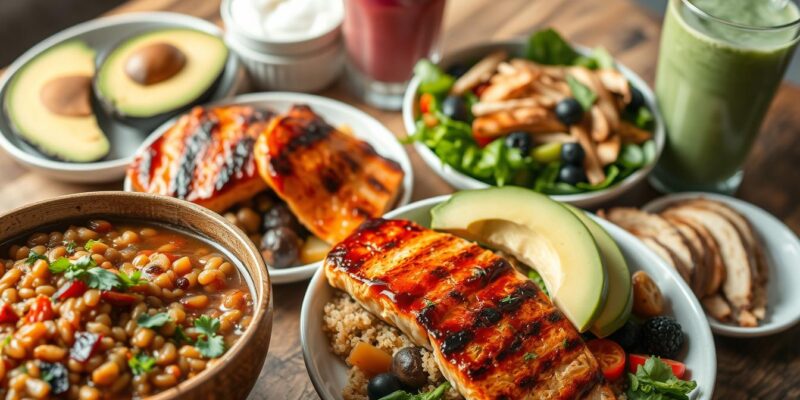
Protein is very important for our bodies. It helps with muscle growth, keeps us healthy, and helps us feel full. Eating more protein can make us feel better and help us lose weight.
Experts say we should eat 25-30 grams of protein at each meal. You can get more protein by choosing Greek yogurt over regular yogurt. A small Greek yogurt has 20 grams of protein, while regular yogurt has only 9 grams.
Eating protein snacks during the day can also help. They keep you full and help you stay on track with your diet.
Key Takeaways
- Protein is vital for muscle growth, immune function, and nutrient transport.
- Regular protein intake helps stabilize blood sugar and aids in weight management.
- Healthy adults should target 25-30 grams of protein per meal.
- Switching from regular to Greek yogurt can boost your protein intake significantly.
- Incorporating high-protein snacks can help maintain satiety and nutrition goals.
Why Protein Is Essential for Your Health
Protein is key for keeping us healthy. It helps fix tissues, boosts our immune system, and makes hormones. Knowing this helps us choose better food and lifestyle.
The Role of Protein in the Body
Protein is vital for fixing tissues and keeping our immune system strong. It also helps make hormones. The right mix of plant and animal proteins is important for our health.
Recommended Daily Intake of Protein
The amount of protein we need changes with age, sex, and how active we are. For most adults, it’s about 0.8 grams of protein per kilogram of body weight. A 70kg person should eat around 56 grams of protein daily.
But, if you’re very active or do lots of strength training, you might need more. Post-menopausal women need even more protein than men.
The Benefits of a High-Protein Diet
Eating more protein can help build muscle, manage weight, and control blood sugar. A study from Harvard Medical School found that eating more plant proteins can lower cancer and heart disease risks. Eating at least three meatless meals a week is good.
Try foods like lentils, green peas, and quinoa. They’re full of protein and fiber. This is good for your digestion and heart health.
Top High-Protein Foods to Include in Your Diet
Adding different high protein foods to your diet is key. Both animal and plant proteins have great benefits. Let’s look at some top protein sources for your meals.
Animal-based Protein Sources
Animal proteins are a favorite for boosting protein intake. They are packed with protein and amino acids the body needs. Here are some top picks:
- Chicken Breast: A 4-ounce serving of boneless, skinless chicken breast provides 25 grams of protein with just 3 grams of fat.
- Turkey Breast: With 27 grams of protein per 4-ounce serving, turkey breast is another lean choice, containing only 2 grams of fat.
- Fish: Fish like tilapia and canned tuna are fantastic servings of animal-based proteins. A 4-ounce portion of tilapia provides 23 grams of protein and minimal fat.
- Eggs: A large egg delivers 6 grams of protein along with a balanced amount of fat, making it a versatile food for many meals.

Plant-based Protein Sources
Plant proteins are great for those who prefer them. They offer protein, fiber, and vitamins. Here are some top plant-based proteins:
- Chickpeas: One cup of drained canned chickpeas offers 11 grams of protein, making them a great addition to salads and stews.
- Black Beans: With 15 grams of protein per cooked cup, black beans are a substantial protein source for various dishes.
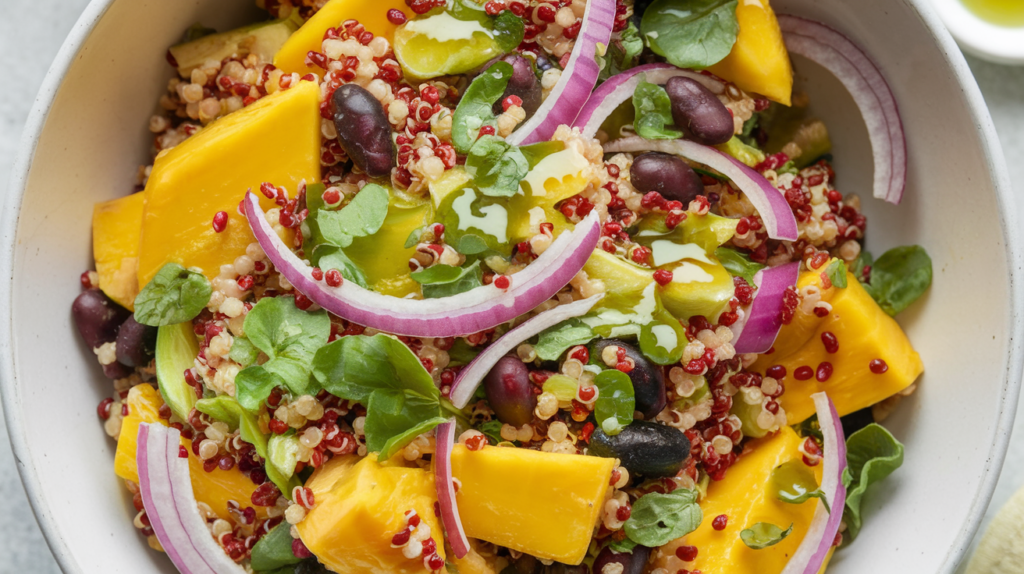
- Quinoa: A versatile and nutrient-rich option, one cup of cooked quinoa provides 8 grams of protein and various essential nutrients.
- Tofu: Half a cup of tofu delivers an impressive 22 grams of protein, making it an ideal staple for vegetarian and vegan diets.
Mixing animal and plant proteins gives you all the amino acids you need. This is crucial for those on a vegetarian or vegan diet. By mixing both, you get all the nutrients your body needs.
Easy Ways to Add More Protein to Your Meals
Adding protein to your meals is easy and tasty. Here are some easy ways to add more protein to every meal. This ensures you stay energized and satisfied all day.
Breakfast Ideas
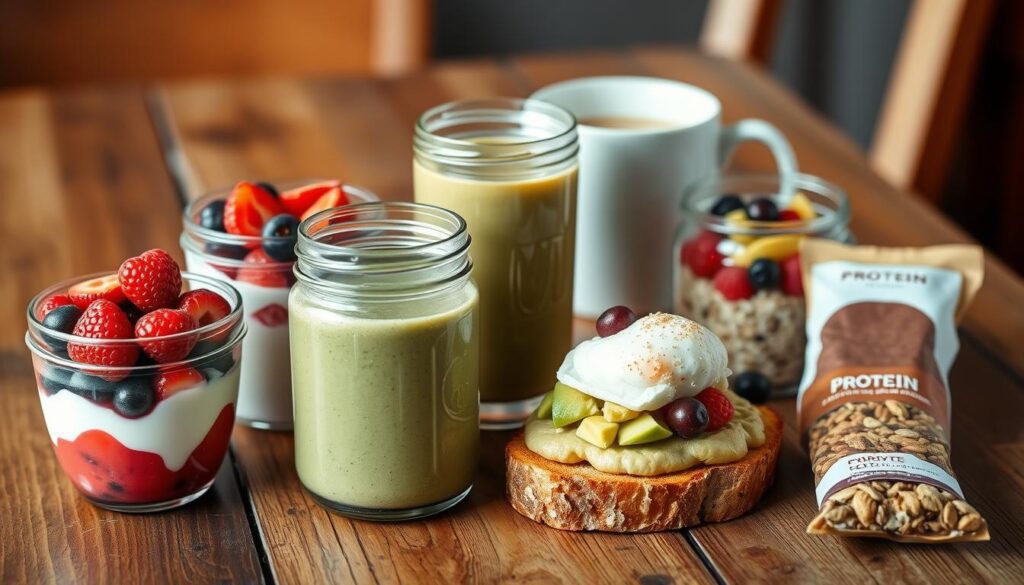
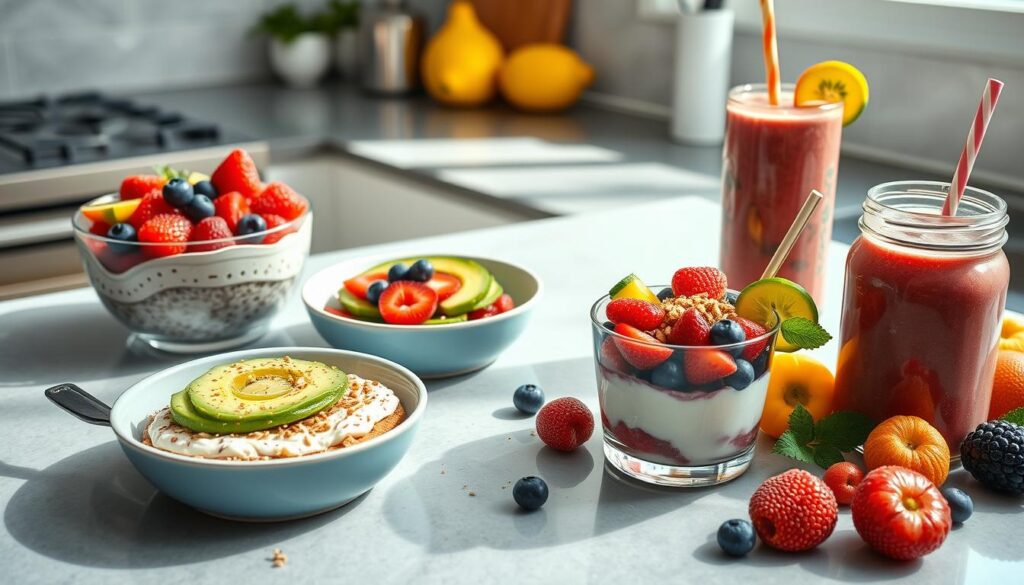
Start your day with a high-protein breakfast. Try a smoothie with Greek yogurt, low-fat milk, frozen fruit, and almond butter. It has 20 grams of protein.
Or, have a high-protein waffle with peanut butter and blueberries. It has 12 grams of protein.
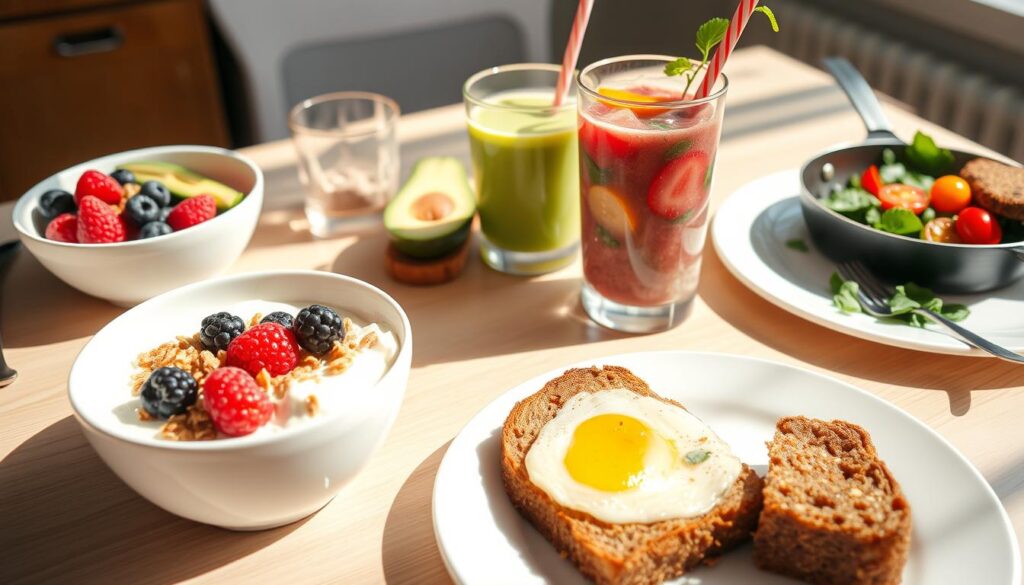
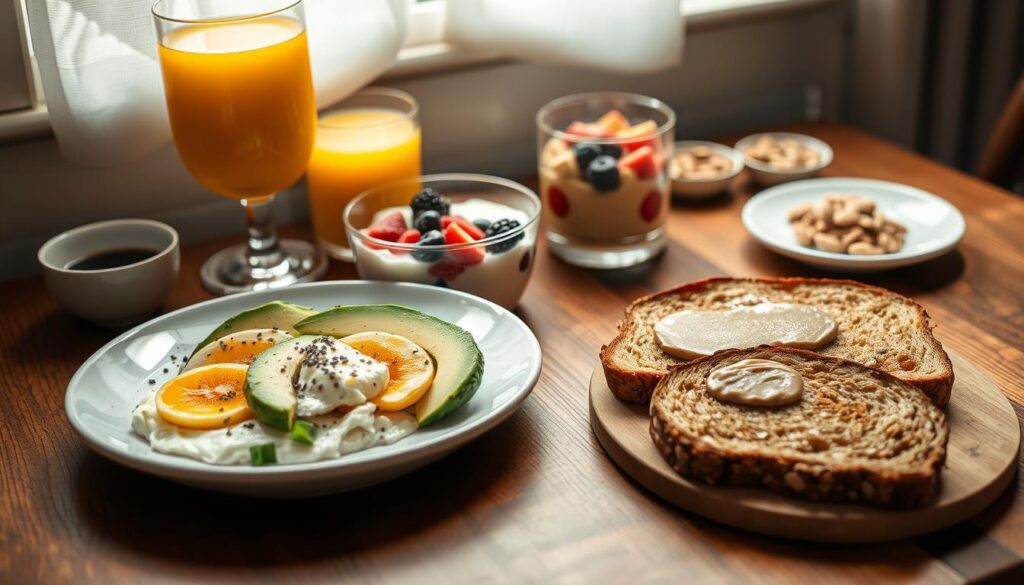
Other great choices include Greek yogurt with nuts and seeds. Or, a breakfast bowl with eggs, avocado, and whole-grain toast.
Lunch and Dinner Options
For lunch and dinner, there are many protein-rich meals. Try a Greek yogurt parfait with fruits and nuts. Or, a salmon salad for lean protein and omega-3s.
Refried black beans with a corn tortilla and cheddar cheese is another good choice. It has 14 grams of protein.
Tofu and beans are also great. A third of a 16-ounce tofu package has 23 grams of protein. White bean & smoked sausage skillet is also tasty and nutritious.
Salmon quinoa bowls are a protein-rich duo. They combine quinoa and salmon’s benefits.
Healthy High-Protein Snacks
Snacks are a great way to add protein. A hard-boiled egg has 6 grams of protein. Two tablespoons of peanut butter have 8 grams.
Edamame has 18 grams of protein per cup. Low-fat string cheese has 7 grams of protein per ounce. Try a hummus dip with multigrain crackers for a protein-rich snack.
Cottage cheese (1/2 cup) has 14 grams of protein. It’s perfect for snack bowls with fruits or veggies. High-protein cereal with low-fat milk is also a good choice.
How to Add High Protein to Our Diet
Adding more protein to your diet is easy with good meal planning and new recipes. Prepare meals ahead and keep high-protein foods like beans, lentils, and quinoa on hand. This makes it simple to keep your protein intake up all week.
Meal Planning and Preparation Tips
Good meal planning for high protein means making a weekly menu with lots of protein. List meals and snacks you can make ahead. For example, prep chicken breasts, grill salmon, or boil eggs to save time.
Keep your pantry stocked with lentils, quinoa, and canned beans. This way, you always have options to boost your meals.
Recipes for High-Protein Meals
Trying new recipes for high-protein meals makes eating fun and healthy. Swap bean pasta for regular pasta or add lentils to your sauce. This increases protein without losing flavor.
| Food Item | Protein Content (per 100g) |
|---|---|
| Grilled Chicken Breast | 32 g |
| Grilled Beef | 21.7 g |
| Grilled Pork | 35.6 g |
| Cooked Salmon | 22.1 g |
| Grilled Tuna | 34.7 g |
| Boiled Eggs | 12.6 g |
| Skim Natural Yogurt | 4.04 g |
| One Cup of Plain Greek Yogurt | 24 g |
| One Cup of Lentils | 18 g |
| One Cup of Dry Roasted Almonds | 30 g |
Add a variety of protein-rich foods and creative recipes to your diet. This way, you can easily increase your protein intake all day. By trying new high-protein ingredients, you can enjoy a healthy and balanced diet.
The Role of Protein Supplements
Protein supplements are important for health. They help fill nutritional gaps and support muscle growth. They also make you feel full.
Types of Protein Supplements
There are many types of protein supplements. Whey protein has three main types:
- Concentrate: Has varying amounts of protein, lactose, and fat.
- Isolate: Has lots of protein and little fat and lactose.
- Hydrolysate: Is pre-digested for better absorption.
Plant-based proteins like pea, hemp, and soy are good for those with dietary restrictions or allergies.
Who Can Benefit from Protein Supplements
Many people can benefit from protein supplements. This includes:
- Athletes who want to build muscle and recover faster.
- People on diets who want to keep their muscle.
- Those with health conditions needing more protein.
- Elderly people who have trouble getting enough protein from food.
Women need 46 grams of protein a day. Men need 64 grams. Supplements can help meet these needs.
How to Use Protein Supplements Effectively
To use protein supplements well, mix them with whole foods. Here’s how:
- Incorporate them into meals and snacks: Mix protein powders into shakes, oatmeal, or baked goods.
- Mind the timing: Take protein supplements after working out to help muscles recover.
- Control portions: The body only uses 20 to 40 grams of protein at a time. Too much doesn’t help more.
Protein supplements are very helpful. They increase protein intake and help with health goals when used right.
Comparative Table of Protein Types and Their Benefits:
| Protein Type | Characteristics | Benefits |
|---|---|---|
| Whey Protein | Complete protein, high in BCAAs | Muscle building, fast absorption |
| Casein Protein | Slow-digesting | Prolonged release of amino acids |
| Plant-Based Protein | Derived from plants, hypoallergenic | Ideal for vegans, fewer digestive issues |
Combining Protein with Other Nutrients
It’s important to eat more protein for health. But, don’t forget to balance it with other nutrients. This mix helps your body get all the good stuff from food. Here’s how to mix protein with carbs, fats, and fiber for a balanced diet.
Balancing Protein with Carbs and Fats
Protein helps fix muscles and keeps your body working right. But, carbs and fats are key too. Carbs give you energy, and fats help with hormones and cell health. A good diet has all three:
| Macronutrient | Recommended Sources | Benefits |
|---|---|---|
| Protein | Eggs, Greek yogurt, chicken breast | Muscle repair, immune support |
| Carbohydrates | Quinoa, sweet potatoes, whole grains | Energy source, brain function |
| Fats | Avocado, salmon, nuts | Hormone regulation, cell structure |
Adults should get 10-35% of their calories from protein, says the Dietary Guidelines. This balance boosts energy, brain power, and health.
Importance of Fiber in a High-Protein Diet
Fiber is super important, even more with a high-protein diet. Foods like fruits, veggies, and whole grains keep your gut healthy. Fiber stops digestive problems from too much protein:
- Prevents constipation
- Promotes gut health
- Helps you feel full, so you eat less
A good meal plan has 1,406 calories, 97g protein, 128g carbs, and 43g fiber. This mix is key for a balanced diet. Fiber helps with weight, blood sugar, and heart health.
In short, eating more protein is good, but balance is key. Mix carbs, fats, and fiber for a diet that’s good for your weight and health.
Common Mistakes to Avoid When Increasing Protein Intake
When you want to eat more protein, watch out for common mistakes. These errors can harm your health. It’s key to know how to add protein safely.
One big mistake is not drinking enough water. Eating more protein can make you dehydrated. Drinking lots of water helps your kidneys work better.
Don’t forget to eat other important nutrients too. Eating too much protein can be bad for your heart and colon. Choose lean proteins like turkey and fish to stay healthy.
“Lean proteins are beneficial and should be prioritized – avoid relying solely on red meats or processed proteins, which can negate health benefits,” says Dani Marenburg, a renowned nutrition coach who has helped over 1,000 women achieve their weight loss goals.
Don’t suddenly eat a lot more protein. It can make you feel bloated at first. Slowly add more protein to your diet to feel better.
For those who need special diets, like pregnant women or people with kidney issues, adjust protein intake carefully.
- Drink plenty of water to avoid dehydration and support your kidneys.
- Eat a balanced mix of proteins, fats, carbs, and fiber to stay healthy.
- Choose lean proteins to avoid health risks from eating too much red meat.
- Slowly increase your protein intake to avoid feeling sick.
By avoiding these mistakes and adding protein safely, you can improve your diet without harming your health.
Conclusion
Eating more protein is good for you. It helps build muscles and keeps you full. High-protein diets are great for losing weight and feeling full longer.
Adults need at least 56 grams of protein a day. Men need more than women. This is important for staying healthy.
To lose weight and build muscle, you need to plan your protein intake. Eating 25-30 grams of protein at each meal is best. This is true, even after working out.
People who are active should eat 1.2-2.0 grams of protein for every kilogram of their weight. It’s also important to eat carbs and fats too. This makes sure you get all the nutrients you need.
Don’t forget to drink lots of water. Aim for 3-4 liters a day. This helps prevent dehydration from eating too much protein.
High protein diets need careful planning and lots of water. Eating a variety of protein sources is key. This includes both animal and plant-based proteins.
Protein is important for your health and fitness. It helps you reach your wellness goals. Focus on protein for better health.
FAQ
Why is protein essential for our health?
Protein helps our muscles grow and keeps our immune system strong. It also helps make hormones and move nutrients around our body. Eating enough protein helps keep our blood sugar stable and makes us feel full, which is good for our weight.
What is the recommended daily intake of protein for healthy adults?
Healthy adults should eat about 25-30 grams of protein at each meal. This adds up to about 0.8 grams per kilogram of body weight each day. If you’re active or have more muscle, you might need more.
What are the benefits of a high-protein diet?
Eating a lot of protein can help you build muscle, manage your weight, and control your blood sugar better.
What are the best animal-based protein sources?
Good animal-based proteins are chicken, fish, eggs, and lean meats. They give your body the amino acids it needs.
What are the best plant-based protein sources?
Plant-based proteins are legumes, nuts, seeds, and grains like quinoa. They also give you fiber and important vitamins.
What are some high-protein breakfast ideas?
You can add Greek yogurt, eggs, or a protein smoothie to your breakfast. Try Greek yogurt parfaits or scrambled eggs with spinach.
What are some high-protein lunch and dinner options?
Use lean meats, fish, or plant-based proteins in your meals. Chicken stir-fry, salmon salad, or lentil soup are tasty and full of protein.
What are some healthy high-protein snacks?
Snacks like nuts, seeds, cottage cheese, or a protein shake can increase your protein. Almond butter on apple slices or hummus with veggies are also good choices.
How can I effectively meal plan and prepare for a high-protein diet?
Plan your meals and stock up on high-protein foods like canned beans, lentils, and quinoa. Try recipes with protein-rich ingredients, like bean pasta or lentils in pasta sauce.
Can you share some recipes for high-protein meals?
Sure! Try a Greek yogurt parfait, chicken stir-fry, or lentil soup. These meals are easy to make and full of protein.
What types of protein supplements are available?
There are whey, casein, and plant-based protein supplements. Each has its own benefits and can help meet your protein needs, even if you eat a lot of food.
Who can benefit from protein supplements?
Athletes, people with high protein needs, or those who can’t get enough protein from food alone can use protein supplements.
How can I use protein supplements effectively?
Use protein supplements to help balance your diet. Don’t rely only on supplements. Aim for a mix of whole foods and supplements.
How do I balance protein intake with carbohydrates and fats?
Eat a variety of foods to balance your diet. Carbs and fats are important for health, so make sure you get them too.
Why is fiber important in a high-protein diet?
Fiber from fruits, veggies, and whole grains helps your digestive system. It’s important when you eat a lot of protein.
What are some common mistakes to avoid when increasing protein intake?
Don’t forget to drink water and don’t ignore other nutrients. Avoid processed or fatty protein sources. Aim for a balanced diet for the best health.
Disclaimer: This blog and all images are made by AI