As the sun set behind the mountains, Jennifer felt a thrill. The summer heat was gone, replaced by a cool breeze. She was ready to start her winter garden, eager to grow fresh veggies.
She had learned to garden in winter the hard way. After a few failed seasons, she found the right techniques. Now, she wanted to help others grow their own winter harvest.
Key Takeaways
- Embrace the unique opportunities of winter gardening in the desert Southwest.
- Understand the challenges, such as occasional frost and shorter daylight hours, and adjust your techniques accordingly.
- Discover a wide range of cool-season crops that can thrive in the mild winter climate.
- Learn strategies for protecting your plants and extending the growing season.
- Explore the benefits of growing your own fresh, flavorful vegetables in the colder months.
Understanding Winter Gardening Basics
Gardening in winter can be rewarding and practical. It gives you fresh produce when stores are out. Knowing the challenges and benefits of winter gardening helps you enjoy a rich harvest.
Benefits of Growing Winter Vegetables
Growing winter vegetables has many advantages. These include:
- Maintaining healthy soil year-round by preventing weed overgrowth and keeping the soil active
- Deterring pests that may thrive in warmer weather
- Extending the growing season and enjoying a continuous supply of fresh, homegrown produce
Climate Considerations for Winter Growing
When planning a winter garden, consider your local climate. In places like California, winters are milder. You need to adjust watering, control weeds, and choose frost-tolerant plants for success.
Essential Tools and Equipment
To have a thriving winter garden, you need the right tools. Must-haves include frost cloth, row covers, and mulch. These protect plants from cold. Using these tools is key to a successful winter garden.
Learning the basics of winter gardening opens up the joy of growing fresh produce in cold months. With the right tools and climate knowledge, you’re set for a bountiful winter harvest.
Best Cold-Hardy Vegetables for Winter Growing
Some vegetables love the cold weather. Leafy greens and root vegetables are perfect for winter gardens. They provide a great harvest even when it’s chilly.
Leafy greens are a top pick for winter gardens. Kale, spinach, Swiss chard, and lettuce like arugula and romaine are very cold-tolerant. Kale can be planted in August for a winter harvest and is full of vitamins A, C, and K. Spinach is also packed with nutrients like iron, folate, and vitamin C.
Root vegetables do well in cool soil. Carrots, radishes, and beets get sweeter as it gets colder. Carrots and radishes can be sown in late summer for a quick harvest. Beets should be planted in late summer for a vibrant harvest in fall and early winter.
Brassicas like broccoli, cabbage, and cauliflower also love the cold. Start Brussels sprouts in mid-summer for a fall or winter harvest. These veggies are full of fiber, vitamins, and antioxidants.
Hardy herbs like parsley, cilantro, and dill add flavor all winter. Edible flowers like calendula and violas add color to your garden.
With the right cold weather crops and overwintering vegetables, your winter garden will be full of fresh produce. From leafy greens to root crops and brassicas, your kitchen will always have something fresh and nutritious.
How to Grow Fresh Vegetables in Your Winter Garden – Even in the Cold!
It’s possible to grow a winter garden, even in cold places. With a few simple steps, you can have a garden full of veggies all winter. Let’s look at how to make your winter garden a success.
Soil Preparation Techniques
Getting your soil ready is key for a winter garden. Add compost or manure to your beds. This keeps roots warm and gives plants the nutrients they need. Also, think about making raised beds. They help with drainage and keep the soil warmer.
Planting Methods and Timing
Planting at the right time is important for winter veggies. Plant cool-season crops like kale and carrots in late fall. This lets their roots grow strong before winter gets too cold. Planting early is crucial to beat the cold.
Watering Practices in Cold Weather
Watering in winter needs care. Water in the morning so it can dry before night. This prevents frost damage. Use irrigation lines or drip systems to water evenly. This keeps plants hydrated without drowning them.
With these tips, you can have a thriving winter garden, even in the coldest places. A bit of prep and the right approach mean you can enjoy fresh veggies all winter.
Protection Strategies for Winter Crops
As winter comes, it’s key to protect your winter crops. Frost protection and overwintering techniques are vital. They help keep your garden safe and fruitful.
Frost cloth or row covers are great for keeping plants warm. These materials trap heat and block cold air. Just cover your plants with them, making sure they reach the ground.
Mulch around your plants can also help. It keeps the soil warm and protects roots. Use straw, leaves, or wood chips for this. They keep moisture in and soil temperature steady.
- Water plants well before a frost to keep them warm.
- Put plants in sunny spots to get more sun.
- Use white walls or aluminum to reflect light and heat.
- Try Agriscaping Micro-Climate methods for extra protection.
With these strategies, your winter crops can thrive. They’ll give you a great harvest, even in cold weather.
Season Extension Techniques
As winter arrives, gardeners look for ways to keep growing food all year. Luckily, there are many techniques to extend the growing season. From cold frames to greenhouses, these methods help cool-weather crops grow even in cold months.
Cold Frames and Hot Beds
Cold frames and hot beds are great for extending the growing season. They create a warm spot that’s protected from wind and temperature changes. Cold frames use a clear top to trap heat and let sunlight in. Hot beds use a heating source, like compost, to warm the soil and plants.
Row Covers and Low Tunnels
Row covers and low tunnels are easy to use and protect many crops. Row covers, made from materials like old sheets, keep plants warm and safe from pests. Low tunnels offer a strong yet light structure that lets in sunlight and protects plants.
Greenhouse Growing Tips
A greenhouse is the best way to extend the growing season. These structures let gardeners grow cool-season crops all winter. Greenhouses protect from cold and provide a perfect environment for plants to grow. With proper care, a greenhouse can be a place for fresh produce all year.
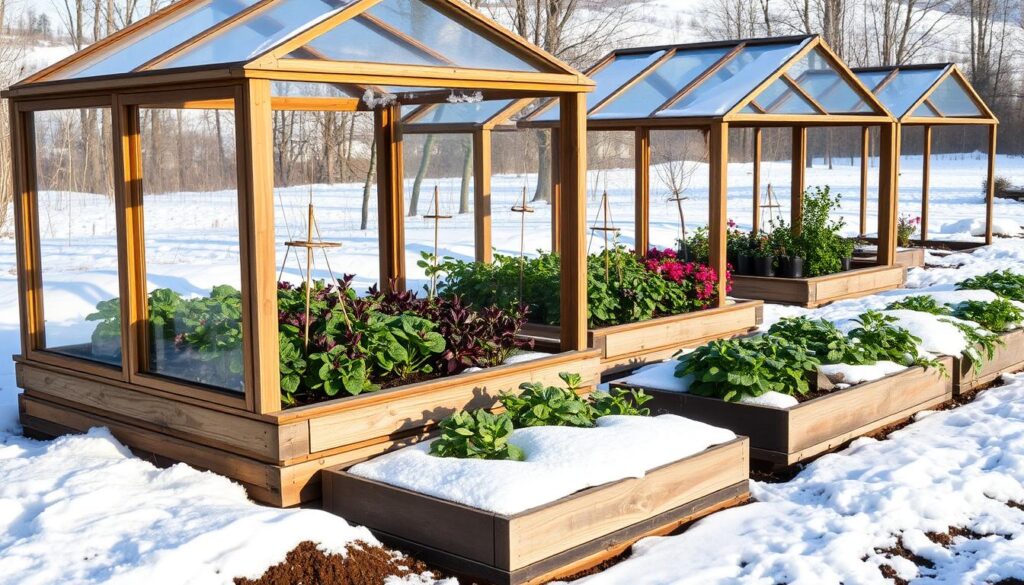
Using these techniques in your winter garden opens up new possibilities. You can enjoy fresh, homegrown vegetables even after the first frost.
Winter Garden Soil Management
Creating a successful winter vegetable garden needs careful soil management. As it gets colder, enrich your soil with compost and organic matter. This feeds your plants and helps your garden grow longer by improving soil quality and water retention.
Start by adding a balanced fertilizer to support strong roots. This helps your cold-hardy veggies grow well in the cold soil. Also, rotate your crops to avoid pests and diseases and keep the soil rich.
Companion planting is key in winter gardening. Pair carrots with onions, spinach with radishes, and broccoli with dill. These pairs help each other grow stronger and create a lively winter garden.
By managing your winter garden’s soil well, you’re ready for a great harvest, even in cold weather. A bit of extra care can make your garden produce fresh food all winter long.
Fast-Growing Winter Vegetables for Quick Harvests
As winter approaches, the garden transforms into a perfect spot for quick-growing veggies. These cold-weather crops love the cooler weather and grow fast. They’re perfect for gardeners who want fresh food quickly and often.
Leafy Greens Selection
Spinach is a top pick for winter gardens. It’s packed with nutrients and ready in 35 to 45 days. Lettuce and arugula are also great, maturing in 30 to 70 days and 20 to 50 days, respectively.
Root Vegetables for Winter
Radishes grow fast, ready in 30 to 70 days. Turnips take a bit longer, needing 40 to 55 days. Carrots and beets are also good choices, maturing in 50 to 70 days.
Cold-Hardy Herbs
Herbs like parsley, cilantro, and dill add flavor to winter dishes. They grow well in the cold, giving you fresh herbs all season.
Adding these fast-growing veggies to your garden plan means more fresh food all winter. With the right planning, your garden will keep giving you delicious harvests.
Managing Pests and Diseases in Winter Gardens
Gardening in winter has its own set of challenges, especially with pests and diseases. But, the cooler weather and fewer insects make it a great time for growing veggies and herbs. With the right strategies, your winter garden can thrive and produce well.
Winter vegetable gardening has a big advantage: fewer pests. Aphids and slugs are less active in cold weather. To keep pests away, try crop rotation and companion planting. For example, onions can keep carrot flies off your carrots.
Even with fewer pests, it’s important to watch for any problems. Look for signs like discolored leaves or insects on your plants. If you find any, remove the affected parts quickly to stop the issue from spreading.
- Keep your plants well-ventilated to avoid fungal diseases.
- Make sure the soil drains well to prevent waterlogged roots.
- Use row covers or low tunnels to protect your overwintering vegetables from pests.
By being proactive and using these tips, you can have a healthy winter garden. It will be full of fresh, nutritious produce all winter long. A little extra care will make your winter gardening efforts pay off.
Harvesting and Storage Methods
Growing winter vegetables and cold weather crops requires careful harvesting and storage. These steps help your garden’s produce last longer. Follow these tips to keep your food fresh through the cold months.
Leafy greens like kale, spinach, and lettuce grow best when picked regularly. Just take the outer leaves, letting the inner ones keep growing. Root veggies like carrots, beets, and parsnips can stay in the ground. Use mulch to protect them from the cold.
For the best taste, pick leafy greens in the morning. They should be crisp and full of water. Store them in the fridge or use root cellaring to keep them fresh longer.
Storing Root Vegetables
Root crops like carrots, beets, and potatoes do well in cool, humid places. Store them in a root cellar, basement, or garage. Keep the temperature between 32°F and 40°F and the humidity at 85-95%.
Carrots and parsnips need sand or sawdust to stay moist but not wet. Beets and potatoes do best in well-ventilated crates or bins.
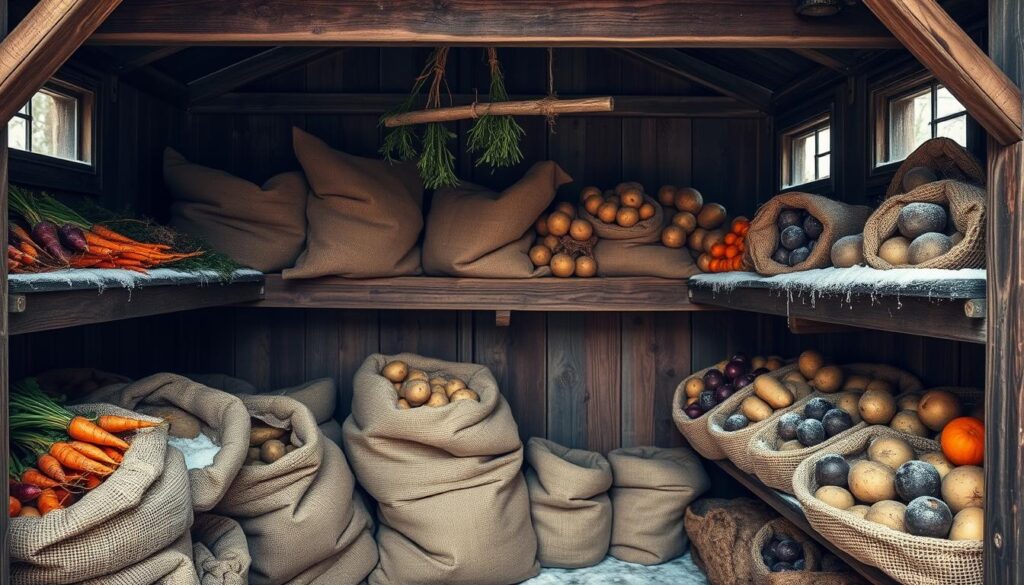
Good storage prevents problems like sprouting, rotting, and shriveling. Move veggies to cooler, darker spots if needed. Make sure they get enough air and keep the humidity right.
With the right harvesting and storage, you can enjoy your winter vegetable garden all winter. Use these tasty and healthy crops in soups, stews, and roasted dishes.
Winter Garden Maintenance Schedule
Keeping a winter vegetable garden alive needs careful attention all winter. You must do regular care, protect against frost, and prune wisely. These steps help your garden thrive, even when it’s cold.
Monthly Care Tasks
Check your garden often to keep plants healthy and soil moist. Here’s what to do:
- Look for pests or diseases and treat them if you find any
- Check soil moisture and adjust watering as needed, since winter dries it out fast
- Remove dead plants to stop disease from spreading
- Add mulch to keep roots warm and moist
Frost Protection Routine
Some plants can’t handle frost. To protect them, follow these steps:
- Use frost cloth, row covers, or plastic to cover plants when it’s cold
- Put a thick layer of mulch around plants to keep the soil from freezing
- Move plants in pots to a warm place during really cold weather
Winter Pruning Guidelines
Prune fruit trees and berry bushes in late winter. Here’s how to do it right:
| Task | Timing | Tips |
|---|---|---|
| Fruit tree pruning | Late winter, before bud break | Remove dead, damaged, or crossing branches to promote airflow and light penetration |
| Shrub pruning | Late winter, before new growth emerges | Thin out overcrowded branches and shape plants for desired form |
| Perennial cutting back | Late winter, before new growth appears | Cut back dead foliage and stems to allow for fresh spring growth |
Stick to a winter garden care plan to get a great harvest. Even with frost protection needed, your winter vegetable gardening will pay off.
Conclusion
Winter gardening in the desert Southwest is full of chances for fresh produce all year. By picking the right cold-hardy crops and using smart protection, gardeners can get lots of harvests even when it’s cold.
Growing how to grow fresh vegetables in your winter garden – even in the cold! gives you a steady supply of healthy veggies. It also keeps the soil healthy and gets your garden ready for spring. You can grow everything from cold-tolerant greens to strong root veggies and hardy herbs.
With the right info, tools, and effort, you can make your winter garden produce all year. Enjoy the fun of winter vegetable gardening and get to eat the fresh, tasty veggies from your garden.
FAQ
What are the benefits of growing vegetables in the winter?
What are some essential tools and equipment for winter gardening?
What are some of the best cold-hardy vegetables for winter growing?
How do I prepare the soil for winter gardening?
How do I protect my crops from frost in the winter?
What season extension techniques can I use for winter gardening?
How do I maintain the soil in my winter garden?
What are some fast-growing winter vegetable options?
How do I manage pests and diseases in my winter garden?
What are some best practices for harvesting and storing my winter produce?
Discover more from Cozy Corner
Subscribe to get the latest posts sent to your email.