Thinking about a calm outdoor space makes me think of a Zen Garden. These gardens have raked sand, stones, and trimmed shrubs. They show peace and calm.
Adding traditional Japanese elements to your garden can make it peaceful. Choosing the right plants and design can create a place for relaxation and thinking.
In this article, I’ll show you how to make your garden Zen-like. We’ll look at Japanese garden design and Zen Garden ideas. These will help you make a quiet retreat.
Key Takeaways
- Discover the key elements of a Zen Garden
- Learn how to incorporate traditional Japanese plants into your garden design
- Explore simple and effective Zen Garden ideas for a peaceful outdoor space
- Understand the importance of carefully selected plants and design elements
- Create a serene and contemplative atmosphere in your garden
Planning Your Japanese Garden Landscape with Traditional Japanese Plants
To make your outdoor space feel like a Japanese garden, plan carefully. Know your garden’s unique features and pick elements that go well together.
Assessing Your Space and Climate Conditions for Japanese Garden Plants
Before picking Japanese garden plants, check your space and the weather. Think about how much sun your garden gets, the soil’s type and how it drains. Most Japanese plants like well-drained soil and some shade, but needs can differ.
I once visited a peaceful Japanese garden. The plants and features were placed with care. The garden’s design matched the local weather and soil, making plants grow well.
Creating Balance with Japanese Garden Landscaping Principles
Balance is key in Japanese garden landscaping. It’s about mixing plants, stones, and water in a way that feels right. Use natural materials and think about asymmetry to make a balanced design.
- Use a mix of tall and short plants to create visual interest.
- Incorporate natural elements like stone and wood to add texture.
- Balance bold features with more subtle elements.
Essential Tools and Materials for Your Zen Garden
To make your Japanese garden real, you need the right tools and materials. You’ll need a shovel for planting, pruning shears for plant care, and a rake for gravel or sand patterns.
Choose natural and green materials for your garden. Wooden planters and stone paths can make your garden feel warm and special.
Iconic Trees for Your Japanese Garden: Japanese Maple and Japanese Pine Trees
Japanese maple and Japanese pine trees are key in Japanese gardens. They bring beauty and peace. These trees are not just pretty. They help make the garden calm and balanced.

Japanese Maple Trees: Varieties and Care Tips
Japanese maple trees are loved for their bright leaves and soft shapes. ‘Bloodgood’ and ‘Dissectum’ are favorites for their bright colors and elegant looks. To keep them happy, plant them in soil that drains well. They like partial shade, more so in hot places.
A famous gardener says, “Japanese maples are great for gardens. They come in many colors and textures, fitting any garden design.”
Japanese Pine Trees: Creating Focal Points
Japanese pine trees are famous for their strong looks and ability to grow in tough spots. You can shape them to make eye-catching spots in the garden. Keeping them healthy means regular pruning and protecting them from bugs.
- Choose varieties like ‘Nana’ or ‘Pendula’ for unique shapes and sizes.
- Ensure proper soil drainage and full sun to partial shade.
- Prune regularly to maintain shape and promote healthy growth.
Flowering Trees for Seasonal Interest
Adding flowering trees like cherry blossoms and weeping peaches brings color and smell to Japanese gardens. These trees make the garden lively all year. For small spaces, try ‘Weeping Yoshino’ cherry blossoms for their pretty white flowers.
Thinking about these gardens, mixing evergreen and flowering trees makes a lively and changing landscape. It’s a garden that grows with the seasons.
Essential Shrubs and Bamboo Plants for Zen Gardens
Exploring Zen gardens, I see how shrubs and bamboo are key. They add structure and beauty. This makes the garden peaceful.

Evergreen Shrubs for Year-Round Structure
Evergreen shrubs are vital in Zen gardens. They keep the garden calm all year. Some favorites are:
- Boxwood: It can be shaped in many ways, making the garden look fancy.
- Holly: Its shiny leaves bring color and texture.
- Japanese Holly: It’s small and grows slowly, perfect for tiny gardens.
These shrubs look good and keep the garden balanced.
Bamboo Plants: Types and Containment Strategies
Bamboo is loved for Zen gardens because of its unique look. But it can spread too much. Here’s what to know:
- Running Bamboo: It grows fast and needs strong barriers.
- Clumping Bamboo: This type is better for small spaces.
To stop bamboo from spreading, use a barrier. This keeps it in check.
“Bamboo is a versatile and beautiful plant that can add a unique element to your Zen Garden. But it needs careful planning and care to stop it from spreading too much.”
Azaleas and Other Flowering Shrubs
Flowering shrubs like azaleas bring color and life. They contrast well with the calm evergreen shrubs. Some favorites are:
- Azaleas: Their bright flowers are a hit in Zen gardens.
- Rhododendrons: These shrubs have big, bold flowers that stand out.
By mixing evergreen shrubs, bamboo, and flowering shrubs, you can make a Zen garden that’s both calm and beautiful.
Ground Covers and Ornamental Grasses for a Serene Japanese Garden
A Japanese garden needs soft ground covers and swaying grasses. They add beauty and peace to the space.
Creating a Moss Garden: Techniques and Maintenance
A moss garden is key in Japanese gardens. It looks like a green carpet. To start, pick a shady spot with lots of moisture and clean the soil of weeds.
Moss likes acidic soil, so you might need to make the soil more acidic. Keep it watered, feed it now and then, and stop weeds from growing.
Ornamental Grasses for Movement and Texture in Japanese Gardens
Ornamental grasses add life to a Japanese garden. Pick the right ones like Pampas Grass or Japanese Forest Grass for your area. They can be the main attraction or the background.
Plant them in odd numbers for a natural look. Prune them in late winter to make them grow new.
Low-Growing Plants for Pathways and Borders in Zen Gardens
Small plants are great for paths and borders. Creeping Thyme and Dwarf Mondo Grass work well. They’re easy to care for and can handle being walked on.
Think about how fast they grow. Some, like Creeping Jenny, spread a lot. You might need to cut them back often.
Water Features and Complementary Peaceful Garden Plants for Zen Gardens
A Zen garden needs water to feel calm. Ponds or fountains make it peaceful. We’ll talk about adding water and plants to make your garden calm.
Plants for Pond Edges and Water Gardens
Choosing the right plants for ponds is key. Water lilies and irises are good for edges. They look nice and keep the water clean. Lotus flowers add elegance.
| Plant | Purpose | Maintenance |
|---|---|---|
| Water Lilies | Shade, Beauty | Regular pruning |
| Irises | Color, Water quality | Divide and re-pot every 3-4 years |
| Lotus Flowers | Elegance, Shade | Regular fertilization |
Creating Dry Stream Beds with Plants and Stones
Dry stream beds are good for saving water. They look like streams with stones and gravel. Plants like creeping thyme or Japanese forest grass make it look natural.
Japanese Garden Flowers for Seasonal Color
Use Japanese garden flowers for color all year. Cherry blossoms bloom in spring. Chrysanthemums add color in fall. This keeps your garden lively.
Maintaining Your Zen-Inspired Garden Throughout the Seasons
To keep your Zen Garden calm and pretty all year, know what your plants need each season. Different plants need different care as the seasons change. Use a seasonal care calendar to keep your garden peaceful.
Seasonal Care Calendar for Japanese Landscaping Plants
A seasonal care calendar is key for your plants’ health and beauty. Here’s a list of tasks for each season:
| Season | Tasks |
|---|---|
| Spring | Prune dead branches, fertilize, and check for pests |
| Summer | Water often, mulch to keep moisture, and watch for diseases |
| Autumn | Clean up leaves, get plants ready for winter, and divide perennials |
| Winter | Protect from frost, prune trees, and plan for next season |
Follow this calendar to keep your plants healthy and growing all year.
Pruning Techniques for Japanese Garden Plants
Pruning is vital for your Zen Garden. It shapes plants and helps them grow. Proper pruning techniques depend on the plant type. But, pruning in late winter or early spring helps plants heal fast.
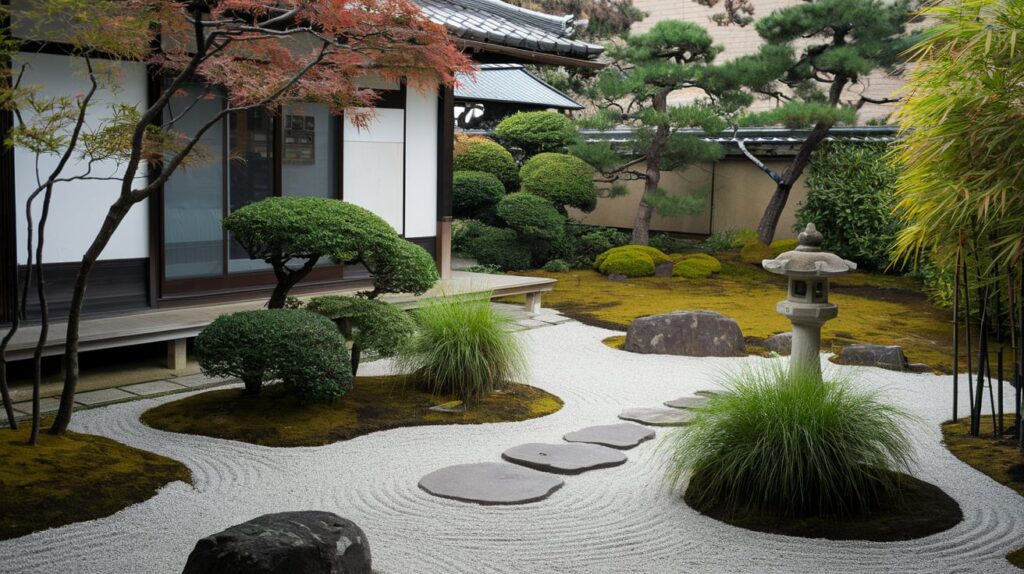
Use the right tools and make clean cuts when pruning. This stops disease and helps plants grow. For Japanese maple trees, prune in spring to keep their shape and promote growth.
Troubleshooting Common Issues with Traditional Japanese Plants
Even with care, problems can happen with your Japanese plants. Pests, diseases, and stress are common issues. Spotting these problems early helps fix them fast.
- Pests: Check your plants often for pests and use natural controls.
- Diseases: Prevent fungal diseases by improving air flow and removing sick leaves.
- Environmental Stressors: Keep plants safe from extreme weather and drought with proper care.
Act quickly to fix problems and keep your Zen Garden looking great.
Conclusion: Finding Garden Tranquility Through Traditional Japanese Plants
Creating a Zen-inspired Garden is a personal and rewarding experience. It brings tranquility and peace to your life. By using traditional Japanese plants, you can make a serene outdoor space.
In this article, we talked about the key parts of a Japanese garden. We mentioned iconic trees like the Japanese Maple and Japanese Pine. We also talked about essential shrubs, ground covers, and water features.
By following these tips and choosing the right plants, you can create a peaceful garden. This garden will help you relax and feel calm.
When you start making a Zen-inspired garden, remember a few things. Know the special traits of traditional Japanese plants. Use them wisely in your garden design.
With patience and hard work, you can make a peaceful place. This place will bring joy and calm to your life.
FAQ
What are the best traditional Japanese plants for a Zen Garden?
How do I choose the right Japanese garden plants for my climate?
What is the significance of balance in Japanese garden landscaping?
How do I maintain a moss garden in my Zen-inspired Garden?
Can I use Japanese garden flowers for seasonal color in my Zen Garden?
How do I prune Japanese garden plants to maintain their shape and health?
What are some common issues with traditional Japanese plants, and how can I troubleshoot them?
How can I create a dry stream bed in my Zen Garden?
What are some essential tools and materials for creating a Zen Garden?
Disclaimer: AI-Generated Content. AI makes this blog and all images
Discover more from Cozy Corner
Subscribe to get the latest posts sent to your email.