Eating a lot of protein is key for staying healthy. It helps grow muscles and keeps your immune system strong. It also makes you feel full and keeps your blood sugar steady.
To get more protein, try adding foods like Greek yogurt, nuts, and seeds to your meals. Even small changes, like choosing Greek yogurt, can make a big difference.
Having protein in every meal helps your body repair muscles and make hormones. The world is seeing more people eating high-protein foods. This is because they help us feel full and keep our energy up.
Key Takeaways
- Protein is crucial for muscle growth, immune function, and satiety.
- Recommended protein intake is 0.8-1g per kilogram of body weight.
- High-protein foods include Greek yogurt, nuts, and seeds.
- Small dietary changes can significantly increase protein intake.
- The global protein market is expected to reach $47.4 billion by 2032.
Why Protein Is Essential for Your Health
Protein is very important for our health. It helps grow muscles and recover from workouts. Let’s explore why eating more protein is good for us.
The role of protein in the body
Protein helps build and fix tissues. It also boosts our immune system and makes hormones. It’s made of amino acids, which our body needs a lot.
Protein helps us recover after we exercise or get hurt. Eating foods high in protein gives our body the amino acids it needs. It also helps move nutrients around our body.
Recommended daily intake of protein
Adults should eat 0.8 to 1 gram of protein for every kilogram of their weight. If you eat a lot of protein, you need more. Eating 25-30 grams of protein at each meal helps with muscle growth.
Drinking enough water is also key when you eat more protein. You should drink 3-4 liters of water a day. If you eat 50 grams of protein, drink 500 ml to 1 liter more.
The benefits of a high-protein diet
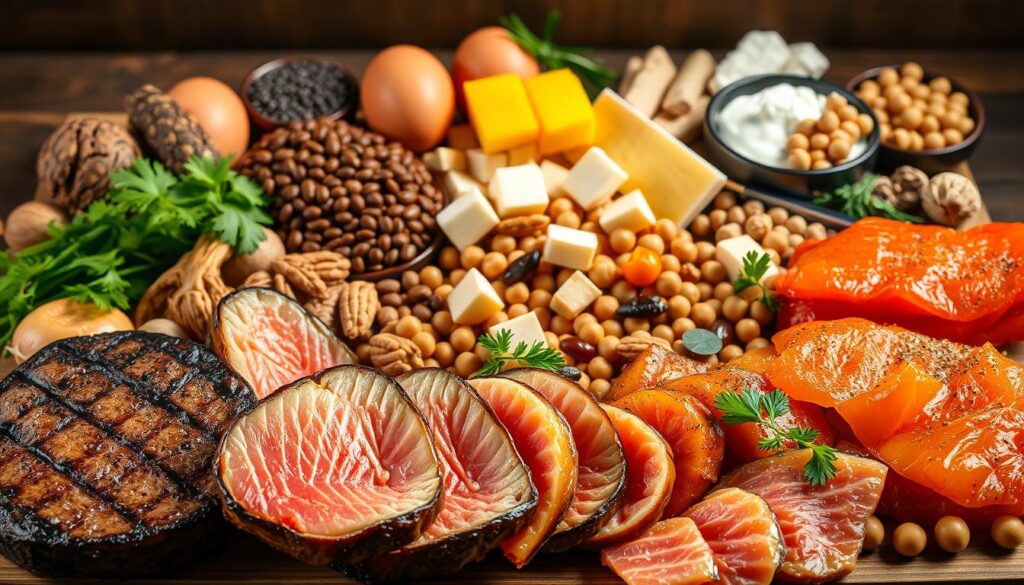
Eating a lot of protein can make you feel full longer. It can help you lose weight and control blood sugar. It also helps keep muscles strong as we get older.
High-protein diets can also help manage type 2 diabetes. But, remember to drink lots of water to avoid problems like kidney stones and bad breath.
Top High-Protein Foods to Include in Your Diet
Adding the best protein sources to your diet is key. It helps keep muscles strong, boosts metabolism, and improves health. You can choose from animal or plant-based options. Both help meet your protein needs.
Animal-based protein sources
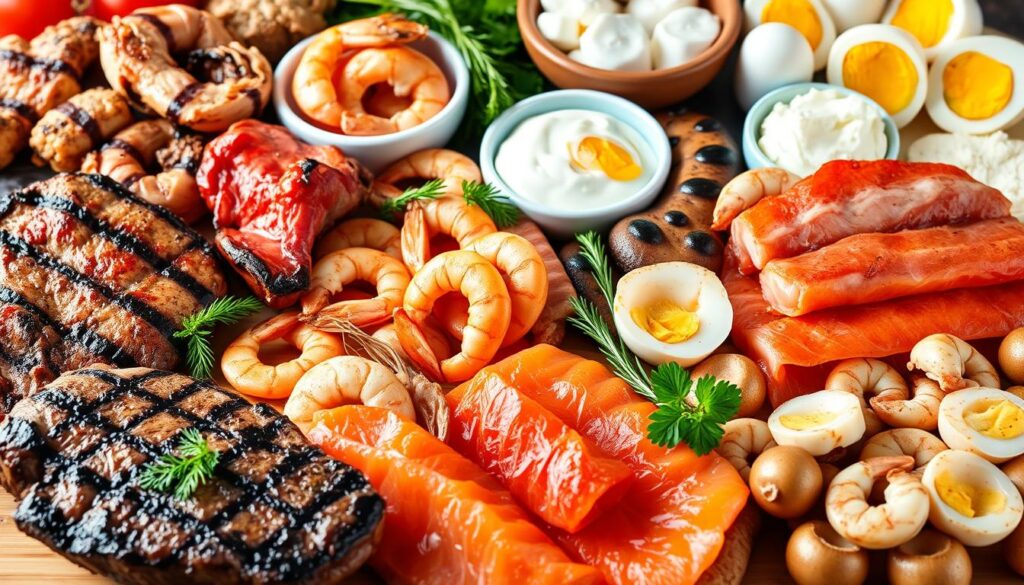
Animal proteins are full of all amino acids you need. Here are some top picks and how much protein they have:
| Animal Food | Serving Size | Protein Content |
|---|---|---|
| Chicken | 4 ounces | 25 grams |
| Turkey | 4 ounces | 25 grams |
| Salmon | 3.5 ounces | 20 grams |
| Tuna | 3 ounces | 20 grams |
| Greek Yogurt | 1 cup | 20 grams |
| Cottage Cheese | ½ cup | 12 grams |
Plant-based protein sources
Plant proteins are great for more than just protein. They also give you fiber, vitamins, and minerals. Here are some favorites:
| Plant Food | Serving Size | Protein Content |
|---|---|---|
| Lentils | 1 cup (boiled) | 18 grams |
| Chickpeas | 1 cup (cooked) | 15 grams |
| Tempeh | 1 cup | 31 grams |
| Tofu | 1 cup | 10 grams |
| Black Beans | 1 cup | 8 grams |
| Quinoa | 1 cup (cooked) | 8 grams |
Mixing animal and plant proteins in your diet is smart. It ensures you get all the nutrients you need. This way, you get the best from both worlds.
Easy Ways to Add More Protein to Your Meals
Adding protein to your meals is easy with the right foods. It helps repair muscles, boost your immune system, and more. Here are some simple ways to increase protein in your diet, including breakfast, lunch, dinner, and snacks.
Breakfast Ideas
Start your day with a protein-packed breakfast. Try Greek yogurt instead of regular yogurt for more protein. Add seeds or nuts for extra protein.
Make protein pancakes with a mix for a quick, filling breakfast. Add whey protein to oatmeal for a protein boost.

Lunch and Dinner Options
For lunch and dinner, choose protein-rich foods. Grilled chicken breast is a great choice, with lots of protein. Chickpeas and lentils are also good, with 15 and 18 grams of protein per cup.
Quinoa is another great option, with 8 grams of protein per cup. Use Protein Pizza Base Mix for a protein-packed dinner with fewer carbs.
| Food Item | Protein Content |
|---|---|
| Grilled Chicken Breast | 31 grams/100 grams |
| Chickpeas | 15 grams/cup (cooked) |
| Lentils | 18 grams/cup (cooked) |
| Quinoa | 8 grams/cup (cooked) |
Healthy High-Protein Snacks
Keep your protein levels up with healthy snacks. Nuts and seeds are great, with 5-10 grams of protein in trail mix. Cottage cheese is another good choice, with 28 grams of protein per cup.
Protein bars offer 10-30 grams of protein. Homemade high-protein ice cream is both tasty and nutritious.
By adding these protein-rich foods to your diet, you can easily meet your protein needs. This keeps your energy up and supports your health.
How to Add High Protein to Our Diet
It’s easy to add more protein to your diet. Just plan and prepare a bit. You can make protein-rich meals a part of your day. Here are some tips and tasty recipes to help you reach your protein goals.
Meal Planning and Preparation Tips
Planning and preparing meals is key to how to increase protein intake. First, pick your favorite high-protein foods. Then, add them to your weekly meal plan:
- Bulk Cooking: Cook foods like chicken, black beans, and quinoa in big batches. Black beans have almost 8 g of protein per ½ cup. They’re great in many dishes.
- Nut Butters: Use nut butters like peanut butter. It has 7 g of protein per 2 tablespoons. You can make snacks or add to recipes.
- Dairy Choices: Choose low-fat cottage cheese. It has 14 g of protein in a ½ cup. Mix it with fruits or use in salads.
Recipes for High-Protein Meals
There are many protein-packed meals for any time of day:
- Greek Yogurt Parfait: Mix one 7 oz container of Greek yogurt (20 g of protein) with berries and granola. It’s a great breakfast.
- Edamame Salad: Combine ½ cup cooked edamame (9 g of protein) with veggies and a light dressing. It’s a tasty and protein-rich lunch.
- Chia Seed Pudding: Blend 4 oz of nonfat milk with 2 tbsp of chia seeds. It’s a pudding with 9 g of protein. It’s perfect for a snack or dessert.
- Tuna Salad: Mix a 6 oz can of tuna (24 g of protein) with mayonnaise and veggies. Serve on whole grain toast for a filling meal.
- Bean-Based Pasta: Make a hearty dinner with pasta made from black beans or chickpeas. It adds extra protein to your meal.
By using these tips and recipes, you can easily add more protein to your diet. Enjoy a variety of protein-packed meals. Remember, eating more protein can greatly improve your health and meet your nutritional needs.
The Role of Protein Supplements
Protein supplements help increase your protein intake. They are great for athletes or anyone needing more protein. Collagen supplements are popular for their special benefits.
Types of Protein Supplements
There are many types of protein supplements to choose from:
- Whey Protein: Made from milk, it has all nine essential amino acids. It’s a complete protein, rich in BCAAs, and comes in different forms.
- Collagen Supplements: Good for bones, skin, and joints. They help make collagen in your body.
- Plant-Based Protein: Made from peas, hemp, or brown rice. Perfect for vegetarians and vegans.
Let’s look at how different protein supplements compare:
| Type | Protein Content | Benefits | Potential Drawbacks |
|---|---|---|---|
| Whey Protein Isolate | 90% or more protein by weight | Low in fat and lactose | May cause digestive issues for some |
| Collagen Supplements | Varies | Supports skin, joints, and bone health | Not a complete protein source |
| Plant-Based Protein | Usually 60% – 80% protein by weight | Good for vegetarians and vegans | May lack certain amino acids |
Who Can Benefit from Protein Supplements
Protein supplements are good for:
- Athletes: They help grow and repair muscles.
- Elderly: They prevent muscle loss and improve bone health.
- People with higher protein needs: Including those with certain health conditions or dietary restrictions.
How to Use Protein Supplements Effectively
To get the most from protein supplements:
- Take 20-30 grams of protein, 3 times a day, to build muscle.
- Put protein powder in smoothies, shakes, or baked goods for extra protein.
- Use collagen supplements for joint and skin health, in drinks or recipes.
When using protein supplements like collagen or whey, always check the labels. Avoid products with extra additives. Using supplements across meals helps meet your daily protein needs without eating too much.
Combining Protein with Other Nutrients
Eating a balanced diet with lots of protein can help you lose weight. It’s important to mix nutrients well for a healthy diet.
Balancing Protein with Carbs and Fats
You need to match protein with carbs and fats for good health. A balanced diet helps your muscles grow and keeps you full of energy. Eating protein, carbs, and fats together makes a strong meal plan.
| Protein Source | Carbohydrates | Fats |
|---|---|---|
| Greek Yogurt | Low | Low |
| Quinoa | High | Low |
| Salmon | Low | High |
| Edamame | Moderate | Low |
| Mixed Nuts | Moderate | High |
Importance of Fiber in a High-Protein Diet
Adding fiber-rich foods is key in a high-protein diet. Proteins help muscles and keep you full. But fiber is good for your gut and stops tummy troubles. A diet full of protein and fiber keeps you going all day.
Mixing these foods makes a great plan for building muscle and losing weight. It helps you stay healthy and feel good.
Common Mistakes to Avoid When Increasing Protein Intake
When you want to eat more protein, watch out for common mistakes. Many people forget to eat enough fiber and healthy fats. These are key for staying healthy.
Don’t just use protein supplements all the time. They’re okay, but whole foods like lean meats and tofu are better. For example, tofu can give you as much protein as chicken.
Don’t suddenly eat a lot more protein. Your body needs time to adjust. This can help avoid stomach problems.
Drinking enough water is also important. More protein means your body makes more urea. You need water to help your kidneys work right.
Eating too much red meat can be bad for your heart and colon. Choose lean meats like turkey and chicken instead.
It’s good to spread out your protein intake. Aim for 30 grams at each meal and 10 grams as a snack. This helps your muscles and digestion.
| Meal | Protein Source | Protein Content |
|---|---|---|
| Breakfast | Greek Yogurt with Almonds | 30 grams |
| Lunch | Grilled Chicken Salad | 30 grams |
| Dinner | Quinoa and Lentil Bowl | 30 grams |
| Snack | Hummus with Vegetables | 10 grams |
Avoid these mistakes to get the most from eating more protein. Always eat a balanced diet for the best health.
Conclusion
Eating more protein can make you stronger and help you manage your weight. It also keeps your blood sugar stable. You can get protein from animals and plants. Adding protein-rich snacks and meals is also good.
A high-protein diet should have 20-35% of your daily calories from protein. Men need at least 56 grams of protein a day. Women need at least 46 grams. Sedentary people need 0.75 grams of protein per kilogram of body weight.
Active people might need 1.2 to 1.6 grams of protein per kilogram. It’s important to eat the right amount of protein and other nutrients. Drinking enough water is also key.
Try to eat 1.2 to 2.0 grams of protein per kilogram of body weight each day. Always think about your own needs and talk to a doctor. This way, you’ll get the most benefits from a high protein diet and stay healthy.
FAQ
What is the role of protein in the body?
What is the recommended daily intake of protein?
What are the benefits of a high-protein diet?
What are some animal-based protein sources?
What are some plant-based protein sources?
What are some high-protein breakfast ideas?
What are some good high-protein options for lunch and dinner?
What are some healthy high-protein snacks?
What are some meal planning and preparation tips for a high-protein diet?
Can you suggest some recipes for high-protein meals?
What types of protein supplements are available?
Who can benefit from protein supplements?
How can you use protein supplements effectively?
How can you balance protein intake with other nutrients?
Why is fiber important in a high-protein diet?
What are common mistakes to avoid when increasing protein intake?
Discover more from Cozy Corner
Subscribe to get the latest posts sent to your email.