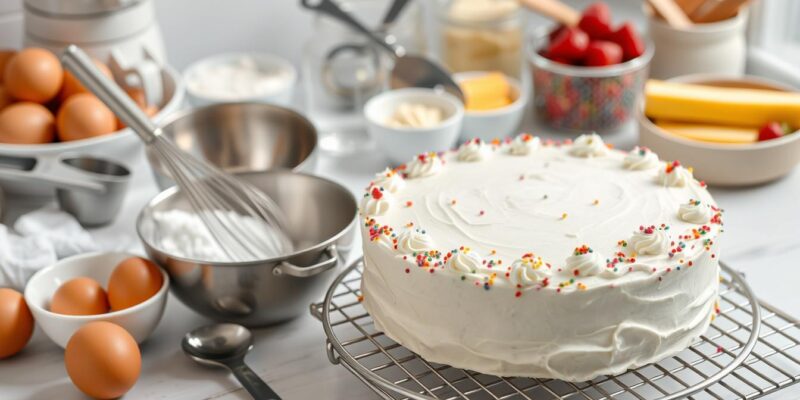
To bake a perfect cake, following a recipe and using fresh ingredients is crucial. Precision is key, as small measurement changes can affect the cake’s texture. Using a digital kitchen scale and preheating the oven correctly ensures a light and fluffy cake. These tips will help you bake a moist and delicious cake that will impress everyone.
Accurate measurements and proper mixing are essential for a great cake. Creaming butter and sugar well and scraping down the bowl ensures even mixing. This guide will give you the confidence to bake the perfect cake every time, whether you’re a beginner or looking for easy recipes.
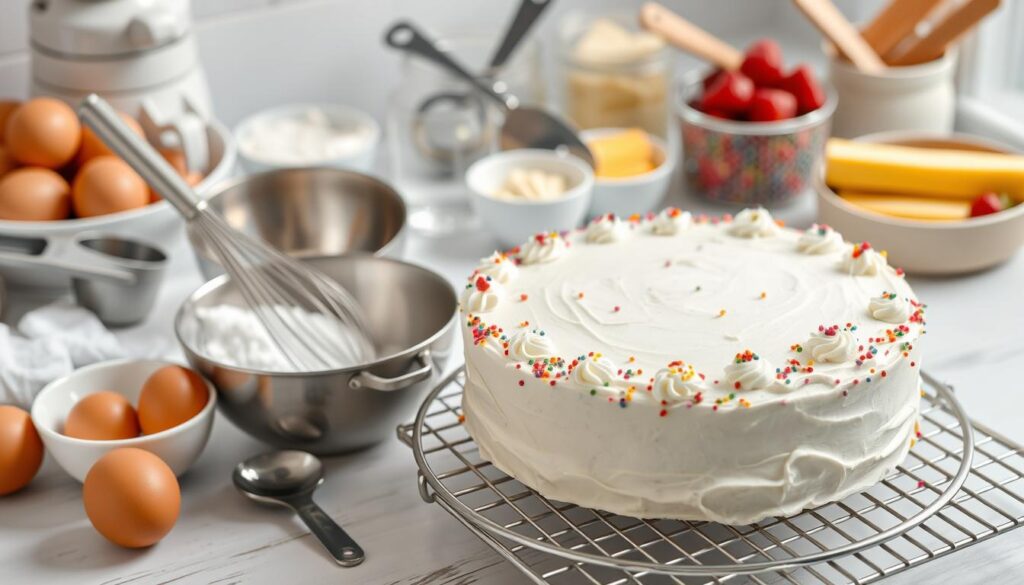
With practice and patience, you can become a skilled cake baker. These simple tips will help you master the art of baking the perfect cake. We’ll cover every step, from reading the recipe to cooling the cake, to guide you through the process.
Key Takeaways
- Use a digital kitchen scale to measure ingredients by weight for accurate measurements.
- Preheat the oven to the correct temperature to ensure even baking and rising.
- Cream butter and sugar properly to achieve a light and airy cake texture.
- Pause the mixer to scrape down the bowl and ensure ingredients are fully combined.
- Use fresh ingredients and follow a recipe to ensure the best results in how to bake a cake.
- Master the art of step-by-step cake baking and easy cake recipes to become a skilled cake baker.
- Practice and patience are key to baking the perfect cake, and with these cake baking tips, you’ll be well on your way.
My Essential Cake Baking Equipment
Having the right tools is key for baking cakes at home. As a beginner, investing in a few must-haves is crucial. A stand mixer is a great choice, as it makes heavy tasks easy.
A hand mixer is also useful, especially for smaller cakes. You’ll need stainless steel measuring cups and spoons. They’re durable and easy to clean. Don’t forget silicone spatulas and a wire whisk for mixing and scraping.
You’ll also need round cake pans, a loaf pan, and a cookie sheet. A wire rack is vital for cooling cakes without them getting soggy. With these tools, you’ll be well on your way to baking like a pro.
Consider getting a silicone scraper, a pastry brush, and parchment paper too. These gadgets help with tasks like scraping bowls and preventing cakes from sticking. With practice, you’ll soon be baking delicious cakes and mastering the basics.
| Equipment | Description |
|---|---|
| Stand Mixer | Handles heavy-duty tasks with ease |
| Hand Mixer | Great for smaller batches of cake |
| Measuring Cups and Spoons | Durable and easy to clean |
| Silicone Spatulas | Essential for scraping the sides of bowls |
| Wire Whisk | Necessary for mixing ingredients together |
Understanding Different Types of Cake Ingredients
Choosing the right ingredients is key to baking a great cake. High-quality items like all-purpose flour, granulated sugar, and unsalted butter are essential. For oven-baked cakes, the type of flour used is critical. It impacts the cake’s texture and structure.
Other important ingredients include eggs, vanilla extract, and milk. For stovetop cakes, the right mix of ingredients ensures even cooking and prevents burning. Some recipes might add nuts, dried fruits, or cocoa powder for extra flavor and texture.
Here are some common ingredients used in cake baking:
- All-purpose flour
- Granulated sugar
- Unsalted butter
- Eggs
- Vanilla extract
- Milk
Knowing how different ingredients work together helps you bake moist and delicious cakes. Whether you’re making an oven-baked cake or a stovetop cake, the right ingredients are crucial.
The secret to baking a perfect cake is using top-notch ingredients and following a reliable recipe. With time and effort, you can become a skilled cake baker. Your creations will surely wow your loved ones.
| Ingredient | Function |
|---|---|
| All-purpose flour | Provides structure and texture |
| Granulated sugar | Adds sweetness and tenderness |
| Unsalted butter | Adds flavor and moisture |
How to Bake a Cake: My Foolproof Method
To bake a cake, follow a few key steps. First, measuring ingredients accurately is crucial. This ensures the right balance of flavors and textures. Use the correct amount of flour, sugar, and eggs.
Next, proper mixing techniques are needed. Cream the butter and sugar, beat in the eggs, and fold in the flour gently. This helps mix the ingredients smoothly and evenly.
For cake batter mixing tips, mix just until the ingredients come together in a smooth batter. Overmixing can make the cake dense. Stop mixing as soon as the ingredients are combined.
Once the batter is ready, pour it into a greased and floured pan. Then, pop it into the oven. The baking time varies based on the cake size and type, and the oven temperature. Generally, a cake takes around 30 minutes to bake at 165°C/330°F or 175°C/350°F without a fan.
After baking, it’s important to cooling a cake after baking. Remove the cake from the oven and let it cool in the pan for a few minutes. Then, transfer it to a wire rack to cool completely. By following these steps and tips, you can make a delicious and moist cake for any occasion.
| Cake Size | Oven Temperature | Baking Time |
|---|---|---|
| 9-inch double layer cake | 165°C/330°F or 175°C/350°F | 30 minutes |
| 22 to 24 cupcakes | 165°C/330°F or 175°C/350°F | 15-20 minutes |
The Secret to Perfect Oven Temperature
To get the perfect cake, knowing how to preheat the oven is key. It’s important to preheat the oven to the right temperature for cakes. This step is crucial for the cake’s texture and structure. “The Best Vanilla Cake Recipe” stresses the need for the correct oven temperature.
Using an oven thermometer is a good way to check the oven’s temperature. Ovens can have wrong dials, causing uneven heat. Regular oven calibration and a thermometer help keep the temperature right, avoiding baking problems.
- Preheating the oven accurately to ensure consistent baking
- Using an oven thermometer to maintain accurate temperatures
- Avoiding overcrowding the oven to ensure even baking
By following these tips, you can make sure your cakes are perfectly baked every time. Understanding how to preheat the oven and the correct baking temperature is essential.
My Top Tips for Cake Pan Preparation
Baking a cake at home starts with a simple recipe. But, to make it perfect, you must prepare your pans well. I’ll share my best tips for getting your pans ready, including greasing and lining methods.
First, grease your pans well. Use butter or cooking spray to keep the cake from sticking. For a homemade touch, mix flour and butter for a non-stick surface. Also, lining with parchment paper makes removing the cake easy and keeps it intact.
- Use the right size cake pan for your recipe
- Grease the pan thoroughly to prevent sticking
- Line the pan with parchment paper for easy removal
- Flour the pan to create a non-stick surface
By following these tips, your cake will turn out great and be easy to remove. Whether you’re using a simple recipe or something more complex, proper pan preparation is key.
Mixing Your Cake Batter Like a Pro
To make a perfect cake, it’s key to follow a beginner cake recipe and baking instructions closely. Mixing the batter right is crucial. Start by creaming the butter and sugar until they’re light and fluffy.
According to Cake Baking Tips | 14 Tips to Bake the Perfect Cake – Crumbs & Doilies, mixing the batter well is essential. Here are some tips to remember:
- Use room temperature ingredients for better mixing.
- Don’t overmix the batter, as it can make the cake dense.
- Use the right mixing tools, such as a stand mixer or a whisk, for thorough mixing.
By following these tips and using a trusted beginner cake recipe, you’ll make a delicious and moist cake. Always follow baking instructions carefully. Don’t be afraid to try new techniques to find what works best for you. With practice and patience, you’ll master mixing cake batter in no time, and your cakes will turn out perfectly.
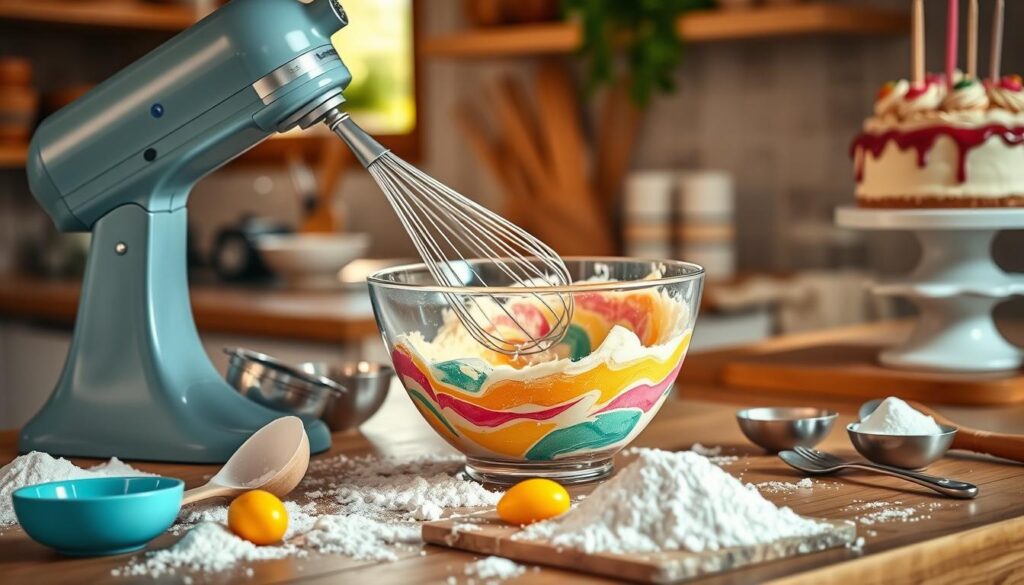
As you get better at cake baking, the process will become more natural. You’ll be able to make beautiful and tasty cakes easily. Whether you’re new to baking or have experience, success comes from following a reliable recipe and baking instructions. Keep practicing your mixing skills until you get it just right.
| Ingredient | Quantity |
|---|---|
| Flour | 1 ½ cups |
| Sugar | 1 cup |
| Baking Powder | 2 teaspoons |
| Baking Soda | ¼ teaspoon |
The Right Way to Test Cake Doneness
Testing for doneness is key in cake cooking. A simple recipe can go wrong if the cake isn’t cooked right. To get it just right, follow a step-by-step guide and use different testing methods.
There are several ways to check if a cake is done. You can look for visual signs, use the toothpick method, or check the temperature. Visual signs include the cake’s color, texture, and shape. A done cake is golden, firm, and smooth.
Visual Indicators
Look for a golden crust, a firm texture, and a smooth surface. If the cake looks pale, soft, or soggy, it’s not done yet.
Using the Toothpick Method
Insert a toothpick into the cake’s center. If it comes out clean, it’s cooked. If it’s covered in batter, bake it a bit longer.
Temperature Testing
Use a thermometer to check the cake’s internal temperature. It should be around 190°F to 200°F for perfection.
By using visual signs, the toothpick method, and temperature checks, you can make sure your cake is perfect. Always follow a simple recipe and a step-by-step guide for the best results.
Cooling and Removing Your Cake
When baking a cake, cooling and removing it from the pan is key. After baking, it’s vital to cooling a cake after baking to avoid breakage or shape loss. Place the cake on a cooling rack to let air circulate around it.
If you’re baking cakes without an oven, cooling and removing is still crucial. Whether using a stovetop or microwave, handle the cake gently and patiently. Here are some tips to remember:
- Let the cake cool completely before removing it from the pan.
- Use a spatula to loosen the cake from the pan, if necessary.
- Place the cake on a serving plate or cake stand to showcase your masterpiece.
By following these simple steps, you’ll enjoy your homemade cake. This is true whether you use a traditional oven or alternative baking cakes without an oven methods.
| Cake Type | Cooling Time | Removal Method |
|---|---|---|
| Layer Cake | 30 minutes to 1 hour | Gently loosen with spatula |
| Bundt Cake | 1-2 hours | Let cool completely in pan |
Alternative Baking Methods
Most of us think of using an oven to bake a cake. But, what if you don’t have an oven? That’s where alternative methods come in. We’ll look at stovetop, microwave, and no-bake options.
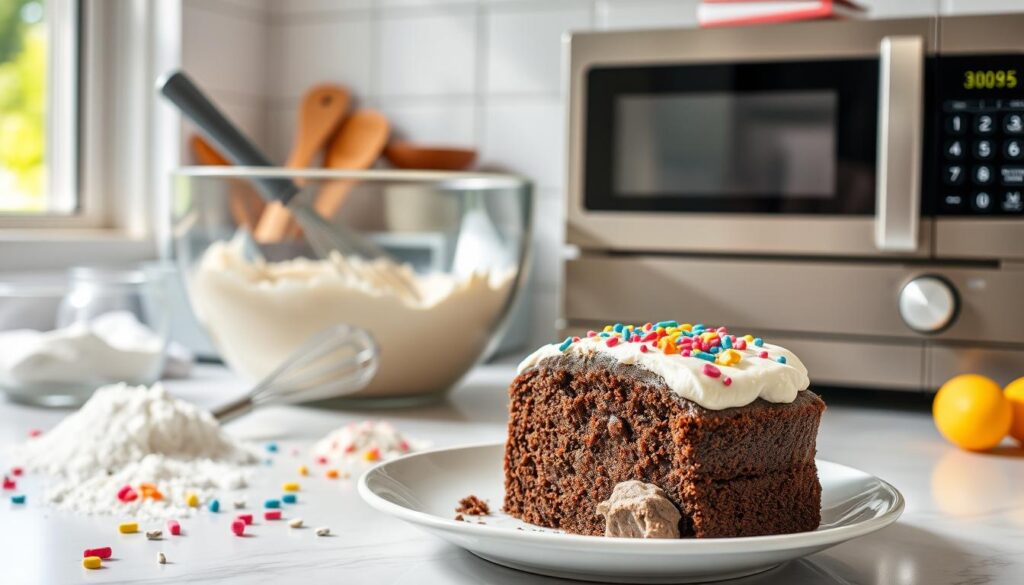
Baking cakes without an oven can be just as tasty. One favorite method is the microwave cake recipe. It’s quick, easy, and great for busy days. Just mix your ingredients, pour into a safe dish, and microwave for a few minutes.
Stovetop Cake Techniques
Stovetop baking uses a skillet or saucepan. It takes skill and patience, but it’s worth it. Mix your ingredients, pour into a greased skillet, and cook over low heat.
Microwave Cake Secrets
Microwave baking is quick and easy. It’s perfect for those in a hurry or without an oven. Mix your ingredients, pour into a safe dish, and microwave for a few minutes.
No-Bake Options
No-bake cakes are great for those without an oven or who prefer not to use one. They use a no-bake tutorial to make a moist cake. Mix your ingredients, pour into a dish, and refrigerate until set.
Popular no-bake options include microwave recipes and tutorials. They’re easy and perfect for busy people. So, why not try alternative baking methods? With practice, you can make delicious cakes without an oven.
Troubleshooting Common Cake Problems
Baking a cake can sometimes go wrong, even for experts. Knowing how to fix common issues is key to a perfect cake. A dry cake often comes from too much flour or baking too long. Accurate measurements and following simple recipes can help.
A sunken center is another common problem. It happens when there’s not enough liquid in the batter. To avoid this, use a scale for flour and the right amount of liquid. These steps help your cake stay moist and tasty.
Fixing Sunken Centers
To fix a sunken center, balance your flour and liquid. A cake soak can also add moisture and flavor. This trick is great for a moist and delicious cake.
Dealing with Dry Texture
A dry cake is not the end. You can fix it with a cake soak or by adjusting the recipe. More liquid or less flour can make a big difference. These tips ensure your cake is always perfect.
Preventing Stuck Cakes
To stop cakes from sticking, grease your pan well and use the right flour. Non-stick pans or silicone pans also work. With these tips, your cake will always come out right.
Storage Tips for Maximum Freshness
Storing your cake right is key to keeping it fresh and tasty. If you’re new to homemade cake baking, learning how to store it is important. For moist cake baking techniques, store it in an airtight container at room temperature or in the fridge.
Freezing your cake is a great way to keep it fresh for longer. The USDA says you can freeze a cake for about six months. Before freezing, wrap the cake tightly in plastic wrap to avoid freezer burn. Also, chill the cake in the fridge for a couple of hours before freezing to keep the icing stable.
Here are some storage tips to keep in mind:
- Store the cake in an airtight container to maintain freshness.
- Keep the cake at room temperature or in the refrigerator to prevent moisture loss.
- Freeze the cake for up to six months for long-term storage.
- Thaw the cake on the counter or in the refrigerator for a few hours or overnight.
By following these tips, you can enjoy your homemade cake for longer. Always check the cake for spoilage before eating. Happy homemade cake baking!
| Storage Method | Duration | Temperature |
|---|---|---|
| Airtight container at room temperature | 3-5 days | 68-72°F (20-22°C) |
| Refrigerator | 3-5 days | 39-41°F (4-5°C) |
| Freezer | up to 6 months | 0°F (-18°C) or below |
Conclusion
Baking the perfect cake is a journey of precision, technique, and patience. By following the tips and tricks in this article, you’ll make moist, flavorful cakes. These will impress everyone around you.
We’ve covered everything from the right equipment and ingredients to mixing and baking. Whether you’re new to baking or experienced, these insights will improve your skills. With practice, you’ll become a confident cake artist, ready for any occasion.
Baking the perfect cake is more than just the end result. It’s about enjoying the journey. Try new flavors and have fun! So, preheat your oven, get your tools ready, and start baking like a pro. The tips you’ve learned will lead you to sweet success.
FAQ
What essential equipment do I need for baking the perfect cake?
You’ll need measuring cups and spoons, a mixer, and mixing bowls. Also, round, square, or rectangular pans are key. Optional tools like an oven thermometer and silicone spatulas can help too.
What are the different types of cake ingredients and their uses?
Knowing your flours, sugars, and fats is important. From all-purpose flour to cake flour, and granulated to brown sugar, each has its role in texture and flavor.
What is the foolproof method for baking a cake?
Start with accurate measurements and the right mixing techniques. Achieving the right batter consistency is crucial. Follow the steps from creaming butter and sugar to adding eggs for a perfect cake.
How do I ensure the oven temperature is perfect for baking a cake?
Preheat the oven correctly and use a thermometer to check the temperature. Adjust the oven as needed for even baking.
How do I properly prepare the cake pan for baking?
Grease the pan with butter or spray and line it with parchment paper. This ensures the cake comes out easily. Adjust your method for different pan shapes.
What are the tips for mixing the cake batter like a pro?
Use the right tools and techniques. Cream the butter and sugar well and add eggs gradually for the perfect batter.
How do I know when my cake is done baking?
Check the color and texture, use the toothpick method, and measure the internal temperature. These signs will tell you if your cake is done.
What’s the best way to cool and remove my baked cake?
Cool the cake on a wire rack and remove it at the right time. Proper cooling prevents drying or sticking.
Can I bake a cake without an oven?
Yes, you can use a stovetop, microwave, or no-bake methods. These alternatives are great when you lack a traditional oven.
How do I troubleshoot common cake problems?
Fix sunken centers, dry texture, and stuck cakes by adjusting the recipe or technique. Knowing the causes and solutions ensures a perfect cake every time.
How do I properly store my baked cake to keep it fresh?
Store the cake in airtight containers at the right temperature. Freezing is also an option to keep it moist and delicious longer.