I’m excited to share my favorite 10 inspiring vegetable garden design ideas. These ideas can help you create a beautiful and productive garden. You can enjoy fresh produce from your own garden with these creative layouts.
From potager gardens to square-foot gardening, there are many designs to choose from. With the right tools and techniques, you can grow juicy tomatoes and crisp peppers. Whether you have a small space or a large backyard, there are many options for a beautiful garden.
Key Takeaways
- Choose a garden design that fits your space and style, such as potager gardens or square-foot gardening.
- Consider using raised garden beds to optimize space and improve soil quality.
- Don’t forget to incorporate creative elements, such as color coordination and interplanting flowers with vegetables.
- Use the right tools and techniques, such as gardening gloves and high-quality gardening tools, to make gardening tasks more efficient.
- Explore different options for growing vegetables, such as container gardening, vertical gardening, and companion planting.
Essential Elements of Successful Vegetable Garden Design
Creating a great vegetable garden needs some key things. Raised bed vegetable garden plans help a lot. They give deep, rich soil that’s good for tomatoes and peppers.
In small spaces, we must use every inch. Urban vegetable garden design tips like vertical and container gardening help. You can grow cherry tomatoes, bell peppers, lettuce, and herbs in little areas.
Some cool ideas include drip irrigation systems. They save water and keep plants moist. Also, raised bed vegetable garden plans help use space well and grow more food.

Think about these important parts for a great garden. Use urban vegetable garden design tips or modern vegetable garden ideas. The goal is to use your space and resources wisely.
Creative Layouts for Maximum Growing Potential
When you design a vegetable garden, think about the layout. A good plan can really help your garden grow well and look great. Raised beds are good for tricky soil and help with water.
They come in sizes like 4×4-foot boxes. This lets you grow more in a small area.
Vertical gardening is also smart. You can use trellises or wall gardens. They make your garden look nice and give more room for plants.
Some people like potager gardens. They change plants often to keep getting fresh food. These ideas help make a garden that’s both pretty and productive.
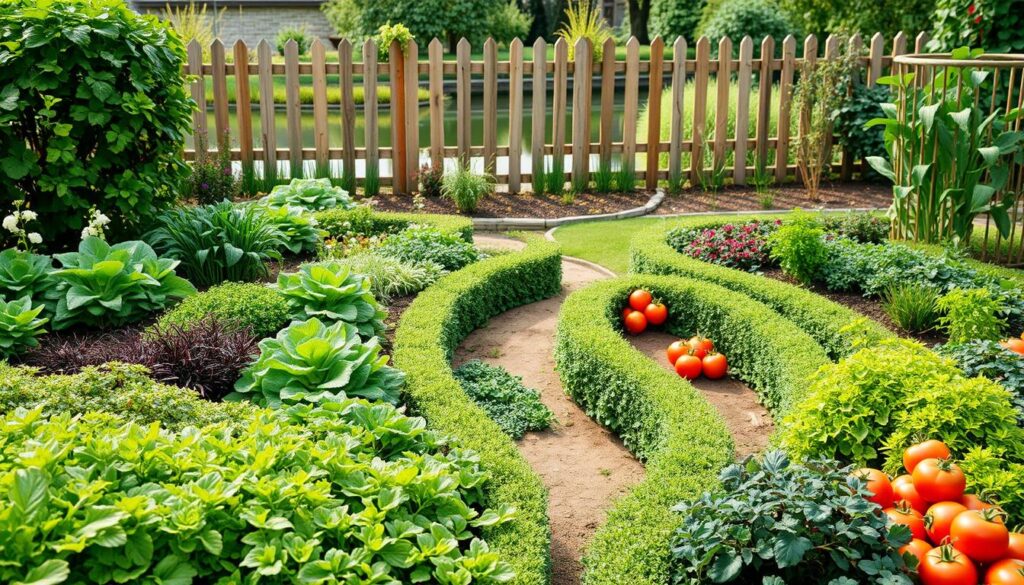
- Using raised beds to improve drainage and soil quality
- Incorporating vertical gardening techniques to maximize space
- Implementing companion planting to promote beneficial relationships between plants
- Utilizing drought-resistant techniques, such as mulching and irrigation, to thrive in water-scarce conditions
Adding these features makes your garden grow well. It will give you lots of food and make your backyard look better.
Modern Space-Saving Solutions for Urban Gardens
As an urban gardener, I’ve learned that even small spaces can become gardens. With a bit of creativity, you can turn your backyard or balcony into a beautiful edible landscape. The key is to use your vertical space well. This can be done with trellises, arbors, or wall-mounted planters.
For a diy garden, focus on using space wisely and keeping things simple. Think about using container gardens or compact raised beds. These are great for urban farming and fit well in your garden layout. For example, mix big and small containers for a design that looks good and saves space.
Other tips for small space gardening include using gravel paving instead of grass. Also, add pollinator-friendly plants to attract bees and butterflies. By following these tips and planning your garden layout carefully, you can have a lovely and productive urban garden. It will give you fresh food and a peaceful spot in the city.
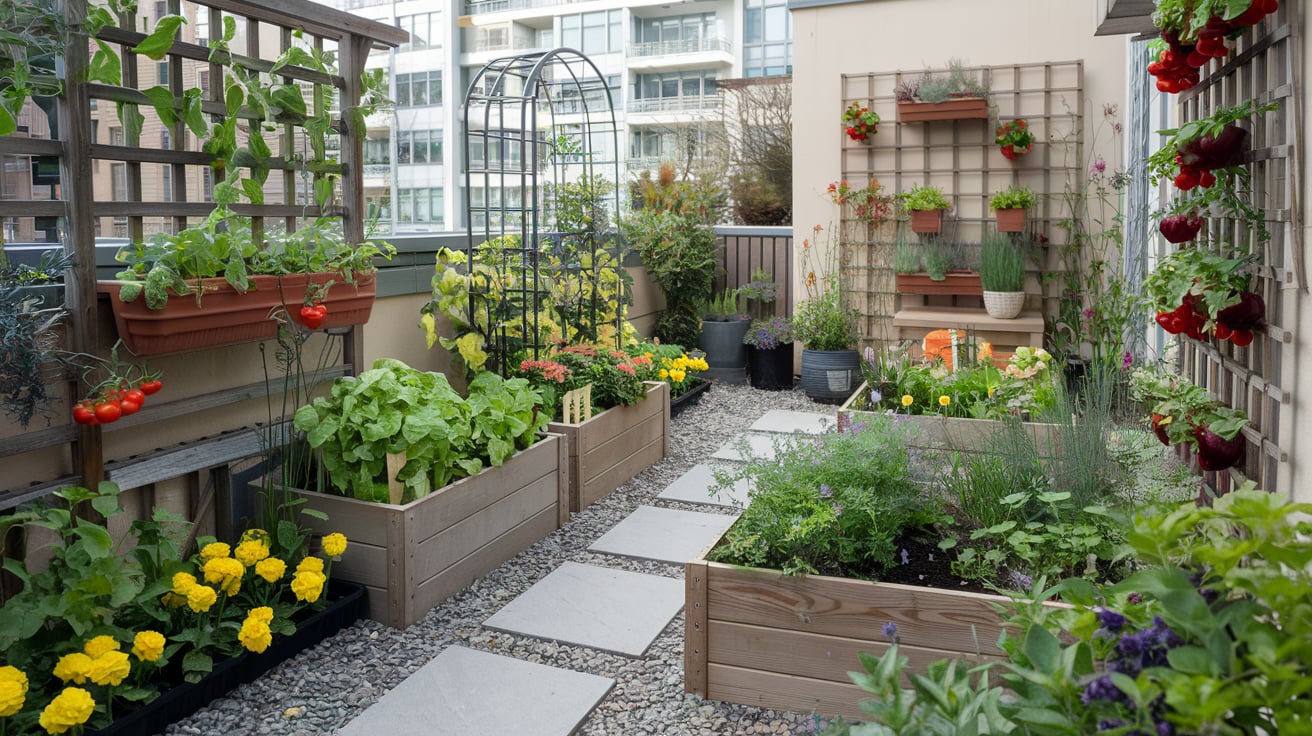
- Vertical gardening systems
- Container gardens
- Compact raised bed designs
- Trellises and arbors
These ideas help you use your space well. They let you create a beautiful and useful edible landscape in tiny areas.
Sustainable and Organic Garden Design Approaches
I’ve learned how important it is to use sustainable and organic garden designs. These methods help the environment and make my garden grow better. Companion planting is a big part of this. It’s when you pair veggies with other plants to make them grow better and taste better.
For example, marigolds help keep nematodes away from tomatoes. Basil and mint make veggies taste better. lets me grow more veggies all year.
I also use organic soil amendments like compost to make the soil better. And I have a drip irrigation system to save water. These choices have made my garden healthier and more productive.
Here are some good things about sustainable and organic garden designs:
- Soil gets better with organic amendments
- More veggies grow with companion planting and greenhouses
- Less water is wasted with drip systems
- More pollinators come with pollinator-friendly gardens
By using these methods, my garden is now a happy, green space. It gives me fresh food and helps the local ecosystem too.
Conclusion: Bringing Your Vegetable Garden Vision to Life
It’s time to make your garden vision real. You can do this with the right garden design and creative layouts. Start small, no matter the size of your space.
First, check out your growing space and soil. Try vertical gardening or container gardens to save space. Use raised beds for better soil and easy care.
Start your gardening journey with green and eco-friendly ways. This helps the soil and pollinators. With planning, hard work, and inspiration, your garden will be full of life.
FAQ
What are the essential elements of successful vegetable garden design?
How can I maximize growing potential in my vegetable garden?
What are some modern space-saving solutions for urban gardens?
How can I incorporate sustainable and organic practices into my vegetable garden design?

Disclaimer: This blog and all images are made by AI
Discover more from Cozy Corner
Subscribe to get the latest posts sent to your email.