Container gardening is a great way to grow your favorite vegetables, even in shady areas. You can grow many delicious vegetables in pots, like the 10 best ones for shade. It’s perfect for small spaces or shady yards because it’s easy to maintain.
In this guide, we’ll teach you how to grow vegetables in shady areas with container gardening. We’ll cover the best vegetables to grow, like potted ones.
Whether you’re a seasoned gardener or just starting, this guide has everything you need. We’ll cover the basics of shade gardening to harvesting your crops. You’ll learn the benefits of container gardening in shady areas and how to pick the best vegetables for your yard.
Key Takeaways
- Container gardening is a great way to grow vegetables in shady areas
- Choose the right vegetables, such as the 10 best vegetables to grow in pots in shade
- Use the right container gardening techniques, including proper soil and fertilizer
- Provide your vegetables with the right amount of light, even in shady areas
- Harvest your crops at the right time to ensure maximum flavor and nutrition
- Container gardening is a flexible and easy way to grow vegetables, even in small spaces
Understanding Shade Gardening Basics
Growing veggies in shade needs some basics. Some veggies like lettuce and spinach do well in partial shade. Others, like tomatoes, need more sun. Knowing this helps you grow a great garden in shade.
There are two main shades: partial and full. Partial shade gets 4-6 hours of sun a day. Full shade gets less than 4 hours. Knowing your shade type helps pick the right veggies.
Types of Shade: Partial vs Full
Partial shade is great for many veggies, like leafy greens and herbs. Full shade is best for veggies like mushrooms and rhubarb. It’s key to match each plant’s light needs for the best growth.
Benefits of Container Gardening in Shade
Container gardening in shade has big pluses. You can control the soil and move plants for more sun. This lets you grow many veggies in shade, even where sun is scarce.
Light Requirements for Vegetables
Vegetables need different amounts of light. Some, like lettuce, do well in low light. Others, like tomatoes, need lots of sun. Knowing this helps you grow a successful shade garden.

| Vegetable | Light Requirement |
|---|---|
| Lettuce | Partial Shade |
| Spinach | Partial Shade |
| Tomatoes | Full Sun |
| Peppers | Full Sun |
Essential Container Gardening Supplies
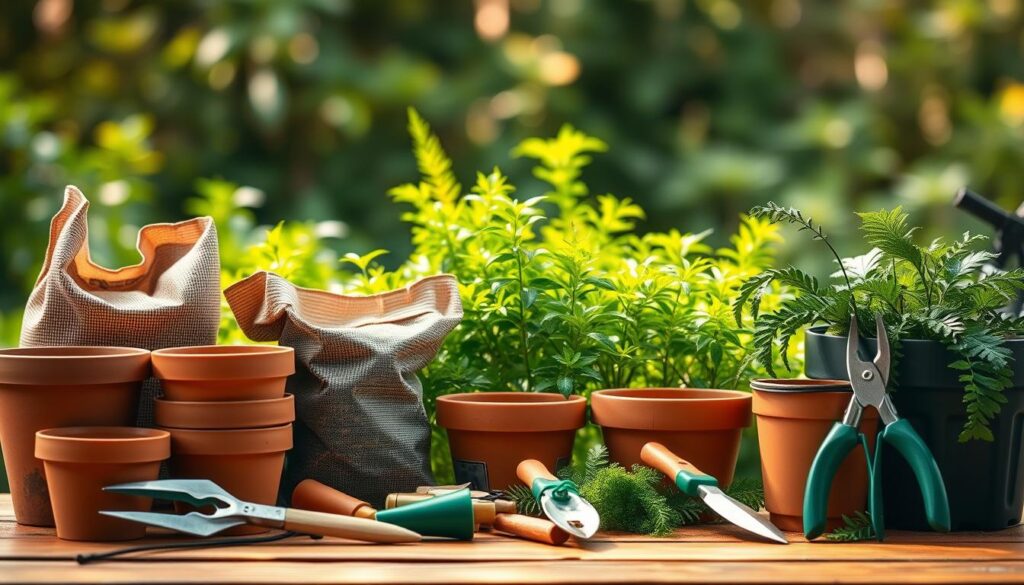
Creating a potted vegetable garden needs the right container gardening supplies. You’ll need shade-tolerant vegetables and stuff to help them grow. Leafy greens like lettuce and kale do well in partial shade.
To start, you’ll need a few key things:
- Containers with good drainage
- High-quality potting soil
- Fertilizers made for container gardens
- An irrigation system for steady moisture
Using the right container gardening supplies helps your potted vegetable garden grow well. Pick the best vegetables for shade and care for them right. You’ll get a lot of food even in shady spots.
Selecting the Perfect Containers for Shade Growing
Choosing the right containers is key for growing veggies in pots. The right one can help your shade garden thrive. Start by thinking about the size. For big plants like tomatoes, go for 5-7 gallon containers. For smaller ones like lettuce or herbs, 3-5 gallons is enough.
Drainage is also very important. Without it, water can cause roots to rot. Look for containers with holes or add your own. This is crucial for veggies in pots, as they can easily get too wet.
Container Size Requirements
- Choose a container that is at least 5-7 gallons for larger plants
- Select a container that is 3-5 gallons for smaller plants
- Consider the mature size of the plant when selecting a container
Drainage Considerations
Drainage is key for healthy plants. Make sure your container has holes to let water out. If not, drill holes in the bottom. This stops water from causing root rot, helping your shade garden grow well.

Soil and Fertilizer Requirements for Shaded Containers
Right soil and fertilizer are key for low light gardening. In small spaces, choose a soil that drains well and is rich in organic matter. This helps your veggies grow well, even in shade.
For veggies that like partial shade, mix compost, peat moss, and vermiculite. This mix drains well, holds water, and lets air in. Add a balanced fertilizer for healthy growth.
Best Soil Mixtures
- Compost: adds nutrients and improves soil structure
- Peat moss: helps to retain moisture and suppress weeds
- Vermiculite: improves drainage and aeration
Fertilizing Schedule
It’s important to fertilize your veggies regularly. Use a balanced fertilizer once a month. For more fruiting, add a high-phosphorus fertilizer. For leafy growth, use a nitrogen-rich fertilizer.
With the right soil and fertilizer, you can grow lots of veggies in small spaces. Watch your plants and adjust your fertilizer schedule as needed. This will help you get the best results.
| Fertilizer Type | Application Frequency |
|---|---|
| Balanced fertilizer | Once a month |
| High-phosphorus fertilizer | Once a month |
| Nitrogen-rich fertilizer | Every 2 weeks |
Watering Techniques for Container Vegetables
When you garden in the city, watering is key. Urban gardening ideas need the right water care. For growing leafy greens in shade, keep the soil moist but not too wet.
Stick your finger into the soil to check. If it’s dry up to your knuckle, it’s time to water. Water in the morning so plants drink all day. Don’t splash water on leaves to stop diseases.
Water at the base of the plants. This lets the soil soak up the water. Here are some tips:
- Water well, but don’t overdo it
- Check the soil often
- Don’t splash water on leaves
Follow these tips for healthy plants. Urban gardening ideas help you grow leafy greens in shade and more.
With the right water care, you’ll grow fresh food soon. These tips work for all gardeners, new or experienced. They help with urban gardening ideas and growing leafy greens in shade.
| Vegetable | Watering Requirements |
|---|---|
| Leafy Greens | Consistent moisture, water daily |
| Herbs | Water when soil feels dry, usually every 2-3 days |
| Tomatoes | Water deeply, but infrequently, usually every 4-5 days |
Common Challenges and Solutions
Growing vegetables on a balcony with little sunlight can be tough. It’s important to learn from mistakes. Pests like aphids and whiteflies love the dark.
To fight pests, bring in natural helpers, use safe sprays, and keep things clean. Also, stop diseases by letting air move, watering right, and cutting off sick parts.
Pest Management in Shade
- Introduce natural predators like ladybugs or lacewings
- Use organic pest control methods like neem oil or insecticidal soap
- Maintain good hygiene practices, such as disinfecting tools and removing weeds
Disease Prevention
- Ensure good air circulation around plants
- Water plants at the base, avoiding overhead watering
- Remove any infected leaves or stems to prevent the spread of disease
With these tips, you can have a great garden, even with little sunlight. Growing food in the shade takes patience and hard work. But with the right steps, you can beat the challenges and enjoy your garden.
| Challenge | Solution |
|---|---|
| Pest management in shade | Introduce natural predators, use organic pest control methods |
| Disease prevention | Ensure good air circulation, water plants at the base, remove infected leaves or stems |
| Growth rate issues | Provide supplemental lighting, use fertilizers designed for shade gardens |
Seasonal Care and Maintenance
As seasons change, adjust your shade garden care. This keeps your plants healthy and thriving. Follow these tips for a lush garden all year.
In spring, prune dead plants and refresh the soil. Start seedlings for veggies like lettuce or spinach. Remember, vegetable gardening tips and shade garden maintenance are key for a good harvest.
Spring Preparation
- Prune dead or damaged plants
- Refresh the soil with new compost
- Start seedlings for favorite vegetables
Summer Management
In summer, focus on watering and mulching. This keeps moisture in and weeds out. Enjoy your harvest and keep your garden thriving with seasonal care tips.
Fall and Winter Care
In fall and winter, water less and fertilize your plants. This prepares them for cold weather. Plan for next year’s garden and adjust your shade garden maintenance routine. Follow these vegetable gardening tips for a healthy garden all year.
| Season | Task |
|---|---|
| Spring | Prune and refresh soil |
| Summer | Water and mulch |
| Fall and Winter | Reduce watering and fertilize |
Harvesting Tips for Container-Grown Vegetables
Timing is key when harvesting vegetables. For shade gardening success, knowing when to pick is crucial. Look for color, size, and texture changes on your plants.
To get the most from container gardening yields, pick at the right time. Leafy greens like lettuce and kale are ready at 4-6 inches. Cherry tomatoes turn bright red and soft when ready. Use scissors or a sharp knife to avoid damage. Handle them gently to prevent bruising.
Here are some general guidelines for harvesting common container-grown vegetables:
- Leafy greens: 4-6 inches tall, or when leaves are large enough to use
- Cherry tomatoes: bright red, with a slight give when pressed
- Cucumbers: 6-8 inches long, or when skin is dark green and glossy
- Carrots: 1/2 to 1 inch in diameter, or when tops begin to yellow
Follow these tips and watch your plants closely. This way, you’ll enjoy a great harvest. Keep your containers watered and fertilized after picking. This helps your plants grow more.
| Vegetable | Harvest Time | Signs of Readiness |
|---|---|---|
| Leafy Greens | 4-6 inches tall | Changes in color, size, or texture |
| Cherry Tomatoes | Bright red, with a slight give when pressed | Color change, softening of skin |
| Cucumbers | 6-8 inches long, or when skin is dark green and glossy | Size, color, and texture |
Conclusion: Success with Your Shaded Container Garden
Growing a shaded container garden is easy with the right tips. Choose the right vegetable gardening crops. Use the right container size and soil.
Water and take care of your garden well. This way, you can grow food even in shady spots.
Being a beginner gardener means being patient and eager to learn. Each season brings new things to try. You’ll get better at gardening over time.
Don’t be scared to try new things in your shaded container garden. The more you do, the more you’ll learn. This helps you grow the best plants for your space.
This guide has given you all you need to know. Now, you can make a shaded container garden that gives you yummy food. Start your gardening journey and watch your garden grow.
FAQ
What are the best vegetables to grow in pots in shade?
How much light do vegetables need to grow in containers?
What size containers should I use for growing vegetables in shade?
How do I choose the right soil mix for my shaded container garden?
How often should I water my container vegetables in the shade?
What are some common challenges with growing vegetables in pots in the shade?
How can I maximize the yield of my shaded container garden?
Discover more from Cozy Corner
Subscribe to get the latest posts sent to your email.