Did you know that over 3 million people in the U.S. have celiac disease? They need to eat only a strict gluten-free diets. This shows how important gluten-free meals are.
A gluten-free meal doesn’t have gluten. Gluten is in wheat, barley, and rye. It’s key for those with gluten issues. Eating gluten-free can make you feel better. It can help with digestion and reduce swelling.
Key Takeaways
- Gluten-free meals are essential for individuals with celiac disease or gluten intolerance.
- A gluten-free diet can improve digestion and reduce inflammation.
- Understanding gluten-free meal options is crucial for maintaining a healthy diet.
- Gluten-free meals are not just for those with medical conditions; they can be a healthy choice for anyone.
- Incorporating gluten-free meals into your diet can be easy and delicious.
Understanding What a Gluten-Free Meal Is and Why It is Good for You
Exploring gluten-free nutrition shows its big benefits. It’s not just a diet choice. It’s a must for those with gluten issues.
Defining Gluten and Gluten-Free Foods
Gluten is a protein in wheat, barley, and rye. It makes the dough stretchy and chewy. But some people get sick from eating it. Gluten-free foods use rice, quinoa, corn, and special flours instead.
Some common gluten-free foods include:
- Rice and rice products
- Quinoa and other gluten-free grains
- Fresh fruits and vegetables
- Meat, poultry, and fish
- Gluten-free baked goods made from alternative flours
| Gluten-Containing Foods | Gluten-Free Alternatives |
|---|---|
| Wheat bread | Gluten-free bread made from rice or corn flour |
| Barley soup | Soups made with gluten-free grains like quinoa or rice |
| Rye crackers | Crackers made from gluten-free flours like almond or coconut flour |
The Science Behind Gluten Sensitivity and Celiac Disease
Gluten sensitivity and celiac disease make people react badly to gluten. Celiac disease damages the small intestine. Gluten sensitivity causes similar symptoms but less damage.
Symptoms include stomach problems, tiredness, and joint pain. A gluten-free lifestyle helps those with these issues a lot.
Learning about a gluten-free diet and adding gluten-free nutrition to meals is a great start. It’s a step towards a healthier life.
The Health Benefits of a Gluten-Free Diet
Gluten-free eating has many benefits. It can improve digestive health and boost energy levels. People often feel better when they eat gluten-free.
Improved Digestive Health and Reduced Inflammation
A gluten-free diet helps with improved digestive health. It cuts down on gluten, a protein in wheat, barley, and rye. This can hurt people with gluten sensitivity or celiac disease.
By avoiding gluten, people can reduce inflammation. This can help with symptoms like bloating, pain, and diarrhea.

Gluten-free diets also mean eating more whole, nutrient-rich foods. This includes fruits, veggies, lean proteins, and whole grains like rice and quinoa. These foods help keep the gut healthy.
Enhanced Energy Levels and Mental Clarity
Many people feel more energetic and clear-headed on a gluten-free diet. This might be because of less inflammation and better nutrient absorption. Eating foods rich in nutrients can help keep energy stable and improve mental health.
- More omega-3 fatty acids from fish and nuts
- Antioxidant-rich foods like berries and leafy greens
- Less processed foods can make energy drop
Weight Management and Nutritional Benefits of Gluten-Free Eating
Gluten-free diets can help with weight management. They encourage eating whole foods and less processed, high-calorie foods. This can also lead to more fiber, vitamins, and minerals.
Choosing wisely and knowing what’s in gluten-free products can make a diet balanced and nutritious. This way, people can enjoy the benefits of gluten-free eating without losing out on nutrients.
How to Start Your Gluten-Free Lifestyle
Starting a gluten-free diet is easy once you know the basics. You need to know about gluten-free nutrition and find hidden gluten. It’s important to know which foods have gluten and which don’t.
Identifying Hidden Sources of Gluten in Your Diet
Gluten hides in foods you might not expect. It’s key to watch what you eat. Here are some common places gluten can be found:
- Processed foods, such as canned soups and sauces
- Certain types of soy sauce and teriyaki sauce
- Some medications and supplements
- Beer and other fermented beverages
Knowing where gluten hides helps you make better food choices.
Essential Gluten-Free Pantry Staples
Having the right gluten-free staples makes life easier. Here are some must-haves:
- Rice and rice products, such as rice flour and rice noodles
- Quinoa and other gluten-free grains
- Gluten-free flours, such as almond flour and coconut flour
- Canned goods, such as beans and tomatoes
These items help you cook gluten-free meals with ease.
Reading Food Labels for Gluten-Free Nutrition
Reading food labels is key for a gluten-free diet. Look for:
- Certification from organizations like the Gluten-Free Certification Organization (GFCO)
- Clear labeling indicating that the product is gluten-free
- Ingredient lists that do not include gluten-containing grains
Being careful with labels keeps your diet gluten-free.
Changing to a gluten-free lifestyle takes time and effort. But it’s worth it for the gluten-free diet benefits. By choosing the right foods, you can get healthier.
10 Delicious Gluten-Free Meals to Try
The world of gluten-free food is full of tasty options. Starting a gluten-free lifestyle opens up a world of healthy and delicious meals.
Breakfast Options
Begin your day with a gluten-free breakfast. Try gluten-free pancakes with almond flour and fresh berries. Or enjoy a quinoa breakfast bowl with roasted veggies and a fried egg.
Lunch Ideas
For lunch, a quinoa salad with mixed greens and grilled chicken is great. Or, try a grilled chicken wrap in a gluten-free tortilla with avocado and salsa.
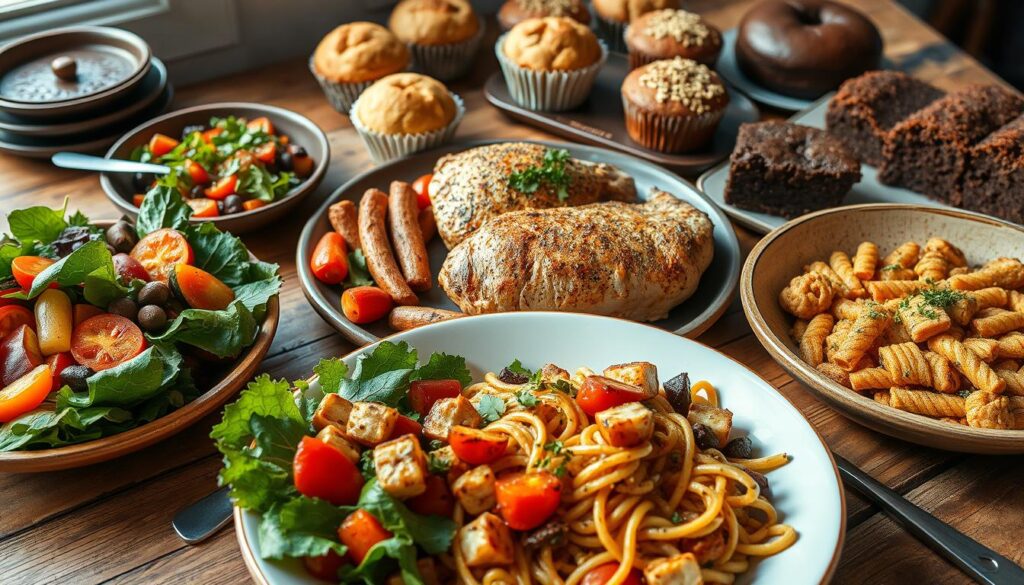
Dinner Recipes
Dinner can be the best part of your gluten-free diet. Try grilled salmon with roasted veggies and quinoa. Or make a cauliflower crust pizza with your favorite toppings.
Snacks and Desserts
For snacks and desserts, enjoy gluten-free chocolate chip cookies or a fruit salad with coconut cream. These treats are sweet and keep your diet gluten-free.
Trying these gluten-free meal ideas makes your diet exciting and fun. It keeps your gluten-free lifestyle enjoyable and healthy.
Overcoming Challenges of the Gluten-Free Lifestyle
Living gluten-free can be tough, like when you eat out or go to parties. But, it’s doable with the right tips. Knowing how to handle these situations makes it easier.
Finding good food without gluten is hard. You need to know how gluten-free foods affect your diet. Making smart choices is key.
Dining Out While Maintaining a Gluten-Free Diet
Eating out gluten-free can be hard. But many places now have gluten-free choices. Just tell the staff what you need.
- Look for restaurants with gluten-free menus.
- Call first to check if they have gluten-free options.
- Tell the server about your gluten-free diet when you order.
Knowing the benefits of gluten-free eating helps. It’s good for your health and can make eating out fun. You get to try new foods.
| Dining Out Tips | Gluten-Free Options | Precautions |
|---|---|---|
| Find restaurants that are gluten-free friendly | Salads, grilled meats, gluten-free pasta | Watch out for gluten in food |
| Call ahead to check options | Gluten-free bread or other alternatives | Tell the server about gluten intolerance |
| Be clear about your dietary needs | Vegetables, fruits, lean proteins | Check what’s in sauces |

Handling Social Situations and Family Meals
Going to parties or family dinners can be tricky. But with some planning, you can handle it well.
Bring a gluten-free dish to share. This way, you know you can eat something. Or, eat before you go if you’re not sure about the food.
Being open and telling people about your diet helps. You can still have fun at gatherings while staying gluten-free. The benefits are worth it.
Conclusion: Embracing the Advantages of Gluten-Free Eating
A gluten-free diet can make you feel better. It’s great for people with celiac disease or gluten intolerance. It helps your digestion, reduces inflammation, and boosts energy.
Starting a gluten-free lifestyle is easy. You can find tasty and healthy gluten-free meals. It’s good for your health, whether you have a gluten issue or just want to feel better.
Try going gluten-free to see how it changes your life. Make smart food choices and find gluten-free foods. You’ll soon see why gluten-free meals are so important.
FAQ
What is a gluten-free meal, and how does it differ from a regular meal?
What are the benefits of a gluten-free diet, and who can benefit from it?
How do I identify hidden sources of gluten in my diet?
What are some essential gluten-free pantry staples?
Can a gluten-free diet aid in weight management?
How can I maintain a gluten-free lifestyle while dining out?
What are some delicious gluten-free meal ideas I can try?
Is a gluten-free diet nutritionally balanced?
Can a gluten-free lifestyle improve my overall health and well-being?
What is the difference between a Gluten-free diet and a keto diet?
Gluten Free Diet Guide
Curious about going gluten-free? Discover the benefits, top foods to enjoy, and smart swaps to support your health. Whether you’re gluten-intolerant or just exploring a cleaner way to eat, this gluten-free guide makes it easy and delicious!
Disclaimer: AI-Generated Content, AI makes this blog and all images
Discover more from Cozy Corner
Subscribe to get the latest posts sent to your email.