Ever stood in the grocery aisle, wondering about a secret to a balanced diet? You’re not alone. With so much dietary advice, it can feel overwhelming. But, healthy eating is simpler than you think.
I’m here to share the basics of creating a nutritious and tasty plate. Whether you’re confused about nutrients or want to improve your diet, learning to make a balanced meal is key. It’s your first step to a healthier life.
Key Takeaways
- Adopting a balanced diet is key to maintaining overall health and wellness.
- Understanding the interplay between macro and micronutrients is essential.
- Nutrition labels are valuable tools that help in making informed dietary choices.
- Healthy eating habits can be simple, satisfying, and tailored to your personal preferences.
- A balanced plate provides a variety of nutrients essential for bodily functions.
How to Build a Balanced Plate: Healthy Eating Made Simple
Starting a healthy eating journey is a straightforward process. It’s all about building a balanced plate. This way, you make meals easy and healthy. Learning about portion control and mixing veggies and fruits makes meals better.
Selecting the Right Proportions
Controlling portions is key to not eating too much. It helps you get the nutrients you need without too many calories. A good meal has different food groups in the right amounts.
Half your plate should be colorful veggies and fruits. They’re full of vitamins and don’t add too many calories. The other half should be whole grains and lean proteins. They give you energy and important amino acids.
Colorful Vegetables and Fruits: Your Plate’s Best Friends
Adding different veggies and fruits to your meals makes them better. They add color and nutrients. Choose leafy greens, bell peppers, and berries for their fiber and health benefits.

Nutrition Tips for Every Meal
It’s important to eat well from breakfast to dinner. This keeps your energy and health balanced. Here’s how I do it with meal planning.
Breakfast: The Right Start to Your Day
My day starts with a breakfast that wakes up my body. I love a bowl of Greek yogurt with berries and nuts. It’s full of protein and fiber, keeping me full and happy till lunch.
Lunch Ideas: Quick, Healthy, and Satisfying
Lunch is quick and nutritious for me. Grain bowls are my favorite. They have quinoa, greens, lean protein, and a light dressing. It’s a meal that keeps me going without slowing me down.
Dinner: Ending Your Day on a Healthy Note
Dinner is for unwinding. I choose foods that are nutritious but not too heavy. Grilled salmon with roasted veggies is my favorite. It’s filling but not too heavy, ending my day well.
| Mealtime | Meal Type | Key Ingredients |
|---|---|---|
| Breakfast | Greek Yogurt & Berries | Yogurt, Berries, Nuts |
| Lunch | Grain Bowl | Quinoa, Greens, Chicken/Tofu |
| Dinner | Grilled Salmon and Vegetables | Salmon, Seasonal Vegetables |

I focus on easy-to-digest, nutrient-rich foods at each meal. Meal planning helps me keep my diet balanced. It’s not just about the meals, but how they fuel my body and mind all day.
Smart Snacking for Health and Wellness
In my journey towards health and wellness, I’ve learned the value of smart snacking. The right snacks boost my energy and help keep my diet balanced. I think it’s good for everyone.
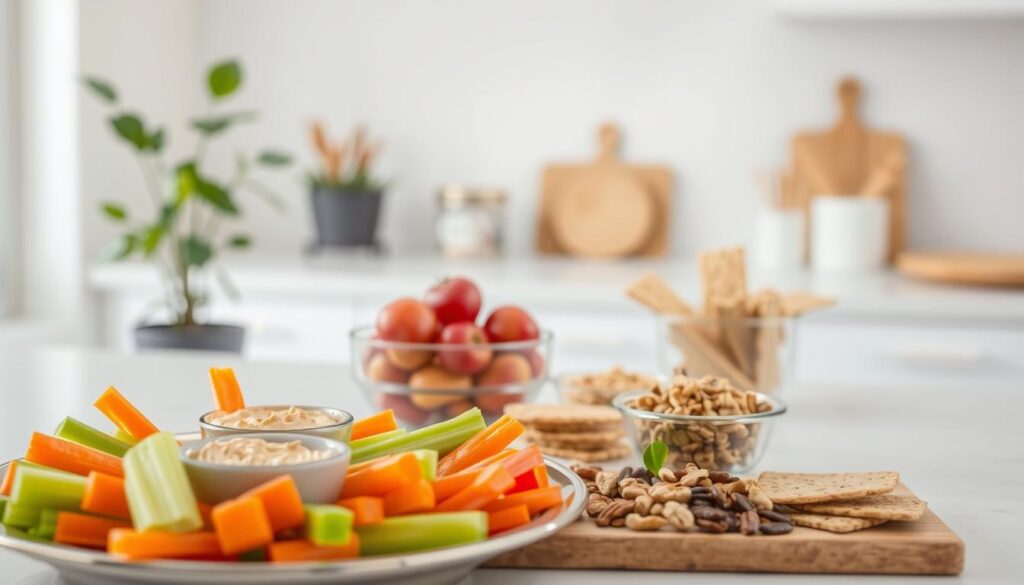
I choose snacks that are both tasty and good for me. Almonds, fruit with nut butter, and veggies with hummus are my favorites. They taste great and are full of nutrients. Here are some of my top picks:
- Almonds: They have healthy fats and protein, keeping me full longer.
- Fruit slices with nut butter: A sweet snack that gives me energy and fiber.
- Vegetables with hummus: A crunchy snack that adds vitamins and minerals to my diet.
The idea of smart snacking is about eating foods that make us healthier. It’s about picking snacks that are good for us and taste great. This way, we avoid eating too many extra calories.
At work or on an adventure, sticking to these snacking habits helps me reach my health goals. It shows that choosing wisely can make a big difference.
Portion Control: A Key Component of Healthy Eating
Portion control is key to healthy eating. It helps you eat the right amount of food. This way, you don’t eat too much.
Knowing serving sizes is important. It lets you eat the right amount of nutrient-rich foods. This helps you avoid eating too much.
Understanding Serving Sizes
Learning about serving sizes is important. It helps you know how much food to eat. This way, you can eat the right number of nutrient-rich foods.
Here’s a quick guide to common serving sizes:
| Food | Standard Serving Size | Visual Cue |
|---|---|---|
| Whole grains (like brown rice or quinoa) | 1/2 cup | A rounded handful or a tennis ball |
| Lean proteins (such as chicken or fish) | 3 oz | A deck of cards or the palm of your hand |
| Raw leafy greens | 1 cup | A baseball or two fists |
| Nuts and seeds | 1 oz or 2 tablespoons | One small handful or a golf ball |
Mindful Eating: Listening to Your Body
Mindful eating means eating with your full attention. It helps you listen to your body’s hunger and fullness signals. This way, you avoid eating too much.
This approach also makes meals more enjoyable. It helps you feel more satisfied.

By using portion control and mindful eating, you meet your body’s needs. You also connect more with your food. These habits lead to a healthier, balanced life.
Integrating Nutrient-Rich Foods into Your Diet
To make your meals better, add nutrient-rich foods to your daily meals. This makes your diet better and helps your body stay healthy. Here’s how to add lean proteins, whole grains, and healthy fats to your balanced diet.

Proteins help build muscles and give you energy. You can eat poultry, fish, or legumes. They are key for a healthy diet.
Whole grains like oatmeal and whole wheat bread keep your blood sugar steady. They also have lots of fiber to help with digestion.
Healthy fats like avocado oil and almonds are good for your brain and help you absorb vitamins. These foods are important for a balanced diet.
| Food Category | Benefits | Examples |
|---|---|---|
| Proteins | Supports muscle health, provides sustained energy | Chicken, Tofu, Lentils |
| Whole Grains | Rich in fiber, it stabilizes blood sugar levels | Quinoa, Brown Rice, Whole Wheat |
| Healthy Fats | Boosts brain function, aids in nutrient absorption | Olive Oil, Walnuts, Avocado |
Eating nutrient-rich foods makes you feel good and stay healthy. It makes every meal nourishing and tasty. Eating right is more important than eating less.
Overcoming Common Barriers to Healthy Eating
Trying to eat healthier is a big step. We need to plan and prepare our meals well. This way, we save time and make sure we eat right. Let’s look at some easy ways to keep eating healthy, even when it’s hard.
Meal Planning and Preparation: Simplifying Healthy Eating
Planning meals is key to healthy eating. It’s not just picking what to eat. It’s also about when to shop and how to store food. This way, every meal helps you get healthier.
Cost-Effective Healthy Eating Tips
Healthy eating doesn’t have to cost a lot. Buying in season, using coupons, and making a shopping list can save money. Simple changes and using what you already have can make your meals healthy and affordable.
Navigating Eating Out and Social Gatherings
Eating out and going to parties can be tough when you want to eat healthy. But, you can plan ahead, choose smaller portions, or pick dishes with lots of veggies. This way, you can enjoy these times without ruining your diet.
| Strategy | Benefit |
|---|---|
| Weekly Meal Prep | Saves time and reduces food waste |
| Seasonal Shopping | Cost reduction and fresher ingredients |
| Menu Pre-Selection | Makes eating out less stressful and healthier |
By planning meals and using smart tips, you can beat the obstacles to healthy eating. Every little step you take is a step towards being healthier!
Conclusion
Healthy eating is more than just food. It’s a choice for a better life. Eating a balanced plate means we get all the nutrients we need. It also makes our meals fun and exciting.
Every person is different, so we need to eat in a way that’s right for us. Tips and guidelines can help, but we must listen to our bodies.
Good diet tips include eating the right amount and paying attention to our food. Mindful eating helps us enjoy our meals more. It also helps us know when we’re full.
Healthcare experts say it’s important to have a diet plan that’s just for you. This is true if you want to reach certain health goals.
We’ve learned a lot about eating well. We know how to make a balanced plate and snack smart. We also know how to get past obstacles to healthy eating.
Now, you can make better choices for your health. Let the idea of a balanced plate lead you to a healthy life. Here’s to making choices that make us feel good!
FAQ
How can I make healthy eating simple?
What should the proportions of my plate look like for a balanced meal?
What are some healthy breakfast options?
How can I keep my lunch healthy and satisfying?
What does a healthy dinner look like?
What are some smart snacking choices?
How can I practice portion control?
What is mindful eating?
Why should I integrate nutrient-rich foods into my diet?
How can I eat healthily without spending a lot of money?
What are some tips for eating out healthily at restaurants?
Discover more from Cozy Corner
Subscribe to get the latest posts sent to your email.