Breaking unhealthy eating patterns isn’t just about willpower—it’s about understanding the complex psychological and physiological factors that drive our food choices. Whether you find yourself mindlessly snacking, emotional eating, or struggling with portion control, these patterns develop over time through repeated behaviors that become automatic.
Research shows that our eating habits are influenced by everything from stress hormones and sleep quality to environmental cues and childhood experiences. The good news? Neuroscience confirms that our brains remain adaptable throughout life, meaning we can rewire these patterns with the right approach.
Neural pathways form differently during mindful eating versus impulsive consumption
Understanding Your Unhealthy Eating Patterns
Before diving into solutions, it’s important to identify what triggers your unhealthy eating patterns. Research from the Journal of Health Psychology shows that most problematic eating behaviors fall into predictable categories. Recognizing your triggers is the first step toward creating lasting change.
| Common Trigger | Resulting Pattern | Potential Solution |
| Emotional stress | Comfort eating high-calorie foods | Mindfulness techniques, stress management |
| Environmental cues (TV, work desk) | Mindless snacking | Environment restructuring, conscious eating |
| Skipping meals | Overeating at the next meal | Regular meal scheduling |
| Social pressure | Eating beyond fullness | Boundary setting, pre-planning responses |
| Boredom | Recreational eating | Activity substitution, engagement planning |
1. Implement the 20-Minute Rule for Cravings
When a craving strikes, your brain’s reward system is activated, making it difficult to resist immediate gratification. Research published in the journal Appetite found that cravings typically peak and then subside within 20 minutes if not acted upon.

Why It Works
Dr. Jennifer Warren of Rutgers University explains that this technique creates a buffer between impulse and action, allowing your prefrontal cortex (decision-making brain region) to regain control from the more primitive reward centers. This simple delay tactic has been shown to reduce impulsive eating by up to 30% in clinical studies.
How to Implement It
- Set a timer for 20 minutes when a craving hits
- Drink a full glass of water during the waiting period
- Engage in a distracting activity (brief walk, phone call, etc.)
- After 20 minutes, reassess if you still want the food
- If you do still want it, enjoy a small portion mindfully
“After struggling with evening snacking for years, I started using the 20-minute rule. Most times, the craving passes completely. When it doesn’t, I enjoy a small portion without guilt. I’ve lost 18 pounds in six months just from this one change.”
2. Practice Hunger Scale Awareness
Many unhealthy eating patterns stem from a disconnection with our body’s natural hunger and fullness signals. A study in the International Journal of Obesity found that people who eat based on external cues rather than internal hunger signals are 3.2 times more likely to be overweight.
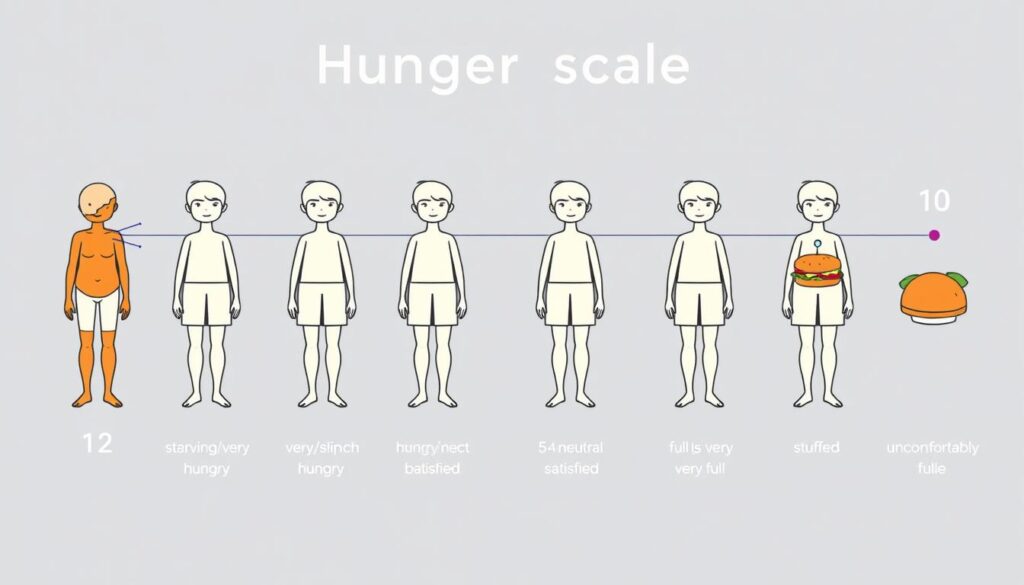
The hunger-fullness scale helps reconnect with your body’s natural signals
Why It Works
Nutritional psychologist Dr. Amanda Baker notes that mindful eating using a hunger scale helps reestablish communication between your digestive system and brain. Regular practice strengthens interoceptive awareness—your ability to perceive physical sensations arising from within your body.
How to Implement It
- Before eating, rate your hunger on a scale of 1-10 (1 being starving, 10 being uncomfortably full)
- Aim to begin eating around 3-4 and stop around 6-7
- Pause halfway through your meal to reassess your hunger level
- Keep a hunger scale journal for two weeks to identify patterns
- Practice identifying the difference between physical hunger and emotional cravings
Pro Tip: Set a reminder on your phone to check in with your hunger level before each meal. After two weeks, this check-in will become more automatic.
3. Restructure Your Food Environment
Environmental cues play a powerful role in triggering unhealthy eating patterns. Cornell University research found that people eat an average of 92% of what they serve themselves, regardless of portion size. Additionally, visible food prompts eating—even when you’re not hungry.

Why It Works
According to behavioral economist Dr. Brian Wansink, author of “Mindless Eating,” we make over 200 food decisions daily—most unconsciously. By restructuring your environment, you make healthy choices the path of least resistance and reduce decision fatigue.
How to Implement It
- Store tempting foods in opaque containers or behind cabinet doors
- Keep healthy options visible and easily accessible
- Pre-portion snack foods rather than eating from packages
- Use smaller plates and tall, narrow glasses
- Create a designated eating area and avoid eating in other spaces
“I was skeptical that something so simple could work, but after reorganizing my kitchen, my snacking dropped dramatically. I didn’t realize how much my environment was triggering my unhealthy eating patterns until I changed it.”
4. Develop Implementation Intentions
Implementation intentions are specific if-then plans that help you respond effectively to situations that trigger unhealthy eating patterns. Research in the British Journal of Health Psychology found that people who formed implementation intentions were 91% more likely to maintain healthy behaviors compared to those with vague goals.

Why It Works
Psychologist Dr. Peter Gollwitzer explains that implementation intentions create mental shortcuts that become automated over time. When you encounter a trigger, your pre-planned response activates before the habitual, unhealthy behavior can take hold.
How to Implement It
Create specific if-then statements for your common eating triggers:
Instead of vague goals like:
- “I’ll eat better when stressed.”
- “I’ll stop snacking at night.”
- “I’ll eat more mindfully.”
Create specific plans like:
- “If I feel stressed, then I will drink tea and do 5 minutes of deep breathing.”
- “If I want to snack after 8 pm, then I will first eat a piece of fruit.t”
- “If I’m about to eat while distracted, then I will turn off screens and sit at the table.”
Research Insight: A study in the journal Health Psychology found that implementation intentions were particularly effective for breaking emotional eating patterns, reducing stress-related snacking by 42%.
5. Practice Mindful Eating Techniques
Mindful eating involves paying full attention to the experience of eating and drinking. Research from Harvard Medical School shows that mindful eating can reduce binge eating episodes by 66% and emotional eating by 80%.

Mindful eating involves full engagement with the eating experience
Why It Works
Dr. Susan Albers, psychologist and author of “Eating Mindfully,” explains that this practice helps interrupt automatic eating patterns by bringing awareness to the act of eating. This awareness creates a pause that allows for more conscious choices.
How to Implement It
- Eat without distractions (no TV, phone, or computer)
- Take time to appreciate the appearance and aroma before eating
- Chew each bite thoroughly (aim for 20-30 chews)
- Put down utensils between bites
- Notice flavors, textures, and your body’s response as you eat
“Mindful eating changed my relationship with food completely. I used to inhale my meals in front of Netflix without even tasting them. Now I enjoy my food so much more, and I naturally eat less because I’m satisfied with smaller portions.”
For a deeper dive into mindful eating techniques, explore the Harvard Health Blog’s guide on mindful eating.
6. Identify and Address Emotional Triggers
Emotional eating—using food to soothe negative emotions—is one of the most common unhealthy eating patterns. A study in the Journal of Health Psychology found that 49% of emotional eating episodes are triggered by stress, while loneliness, boredom, and sadness account for most others.

Why It Works
Psychologist Dr. Jennifer Taitz explains that identifying emotional triggers creates awareness of the connection between feelings and eating behaviors. This awareness, combined with alternative coping strategies, breaks the automatic emotional eating response.
How to Implement It
- Keep an emotional eating journal for two weeks
- Record what you ate, how you felt before eating, and what happened before the feeling arose
- Develop a “feeling menu” with alternative responses to each emotion
- Practice the HALT method before eating (ask: am I Hungry, Angry, Lonely, or Tired?)
- Create an emotional first-aid kit with non-food items and activities
Common Emotional Triggers:
- Work stress
- Relationship conflicts
- Financial worries
- Boredom
- Loneliness
Alternative Coping Strategies:
- 5-minute breathing exercise
- Brief physical activity
- Journaling
- Calling a supportive friend
- Engaging in a hobby
7. Establish Consistent Meal Timing
Irregular eating patterns disrupt your body’s internal clock and hunger hormones. Research in the International Journal of Obesity found that people who eat at consistent times have better appetite control and lower rates of obesity than those with erratic eating schedules.
Consistent meal timing helps regulate hunger hormones and metabolism
Why It Works
Endocrinologist Dr. Satchin Panda explains that our digestive system, metabolism, and hunger hormones operate on a circadian rhythm. Consistent meal timing synchronizes these systems, improving metabolic health and reducing impulsive eating.
How to Implement It
- Establish a regular eating window (e.g., 8-10 hours per day)
- Aim to eat meals at approximately the same times each day
- Include protein and fiber at each meal to stabilize blood sugar
- Plan for one scheduled snack if needed
- Avoid eating within 2-3 hours of bedtime
Important Note: While consistent meal timing is beneficial for most people, those with certain medical conditions (diabetes, pregnancy, etc.) should consult a healthcare provider before making significant changes to their eating schedule.
“After years of skipping breakfast and then overeating at night, I started eating three regular meals at set times. My energy is more stable throughout the day, and I no longer get those intense evening cravings that used to derail my healthy eating intentions.”
8. Use Habit Stacking for Healthy Behaviors
Habit stacking involves attaching a new healthy habit to an existing routine. Research in the European Journal of Social Psychology shows that this technique can increase the success rate of forming new habits by up to 80% compared to trying to establish habits in isolation.
Why It Works
Behavioral scientist BJ Fogg, PhD, explains that existing habits have strong neural pathways in the brain. By connecting new behaviors to established routines, you leverage these existing pathways, making the new habit easier to remember and perform.
How to Implement It
Create habit stacks using this formula: “After I [current habit], I will [new healthy eating habit].”
Examples of Effective Habit Stacks:
- “After I pour my morning coffee, I will prepare a protein-rich breakfast”
- “After I finish lunch, I will fill my water bottle”
- “After I get home from work, I will prep vegetables for dinner”
- “After I brush my teeth at night, I will set out a healthy snack for the next day”
- “After I sit down to eat, I will take three deep breaths before starting”
Keys to Successful Habit Stacking:
- Choose an existing habit that’s already consistent
- Start with just one or two habit stacks
- Keep the new habit small and achievable
- Be specific about exactly when and how you’ll perform the new habit
- Track your consistency for at least 66 days (the average time to form a habit)
Success Tip: Create visual reminders of your habit stacks in the relevant locations. For example, place a note on your coffee maker if that’s the trigger for your morning habit stack.
Breaking Free from Unhealthy Eating Patterns
Changing unhealthy eating patterns is a journey, not an overnight transformation. Research shows that people who successfully maintain healthy eating habits typically experience setbacks along the way but continue to implement their strategies consistently over time.
Remember that small, consistent changes lead to significant results. By implementing even one or two of these science-backed methods, you can begin to rewire your relationship with food and create healthier patterns that support your wellbeing.
The key is to approach this process with self-compassion rather than judgment. Each meal is an opportunity to practice these techniques, and progress—not perfection—is the goal.

Small, consistent changes lead to meaningful transformation
Ready to Transform Your Eating Habits?
Download our free Habit Tracker PDF to monitor your progress and stay accountable as you implement these science-backed strategies. This practical tool includes daily check-ins, trigger identification worksheets, and a 66-day habit formation calendar.
For additional support on your journey to healthier eating patterns, consider consulting with a registered dietitian or psychologist who specializes in eating behaviors. These professionals can provide personalized guidance tailored to your specific challenges and goals.
Disclaimer: AI-Generated Content, AI makes this blog and all images
Discover more from Cozy Corner
Subscribe to get the latest posts sent to your email.