
What if you grab chips at 3 p.m. because of a brain loop? Not because you’re hungry.
Snack cravings are common in the United States. MU Health Care research shows 97% of women and 68% of men crave snacks. Almost 85% of these cravings lead to eating. You’re not alone, and you’re not weak. You need smart ways to manage snack cravings that fit your biology.
This guide offers 5 ways to fight snack cravings. We’ll use science-backed steps. You’ll learn about mindful eating, healthy snacks, and lifestyle tips. These will help you have steady energy and better snacking habits.
Sanford Health studies show processed sugar can cause dopamine bursts and crashes. This leads to cravings. The Journal of the Academy of Nutrition and Dietetics and Obesity links protein, movement, sleep, and stress care to better blood sugar and appetite hormones. Even drinking water can help, as shown in Physiology & Behavior.
Start with simple steps today. Drink water first, eat protein, sleep well, manage stress, and have better snack options. These small changes will make fighting cravings easier and more rewarding.
Key Takeaways
- Cravings are normal and common; smart snack craving management works better than willpower alone.
- Processed sugar can fuel dopamine spikes and crashes that intensify urges.
- Protein-forward meals, movement, and sleep support overcoming cravings by stabilizing appetite hormones.
- Hydration helps; thirst is often mistaken for hunger in the United States.
- Mindful eating strategies and mindful snacking techniques help you tell cravings from true hunger.
- Healthy snack alternatives and planning reduce impulse snacking and improve snacking habits.
Understanding snack craving management and triggers for overcoming cravings
Cravings don’t just happen. They start in the brain and are pushed by hormones and what we see. Smart choices and mindful eating make it easier to manage cravings without feeling left out.
Think of this as a clear map: notice the cue, name the feeling, and choose a small action. These tips help you stay on track without feeling like you’re missing out.
Awareness first: identifying emotional, hormonal, and environmental triggers
Strong feelings can make us want to snack. Stress, boredom, or a tough day can make us crave sweet or salty foods. Hormonal changes, like before a period, can also make us want to eat more.
Our surroundings play a big role, too. Bright wrappers, office break rooms, and the smell of fresh pastries can trigger cravings. Cutting down on these cues helps us fight cravings without relying on willpower alone.
How cravings differ from true hunger and why processed sugar fuels urges
True hunger builds up slowly, and many foods can satisfy it. Cravings, on the other hand, hit fast and target a specific food. They fade if you wait or switch tasks. That’s why starting with a balanced meal is a good idea.
Processed sugar makes dopamine and blood glucose spike, then crash. This crash can make us want to eat again, creating a cycle. Drinking water first can help, as thirst can feel like hunger.
Journaling patterns to decode snacking habits and mindful snacking techniques
Keeping a food-mood log helps find when and why we crave snacks. Write down time, location, emotions, sleep, cycle day, and what you ate. After a week, patterns show where to use mindful snacking techniques.
- Swap the cue: pair coffee with nuts instead of cookies.
- Delay and distract. Set a 10‑minute timer and take a short walk.
- Balance the plate: add protein and fiber to steady energy.
These small changes help manage snack cravings and overcome them in busy times.
Realistic image idea: A person writing in a food-mood journal at a kitchen table
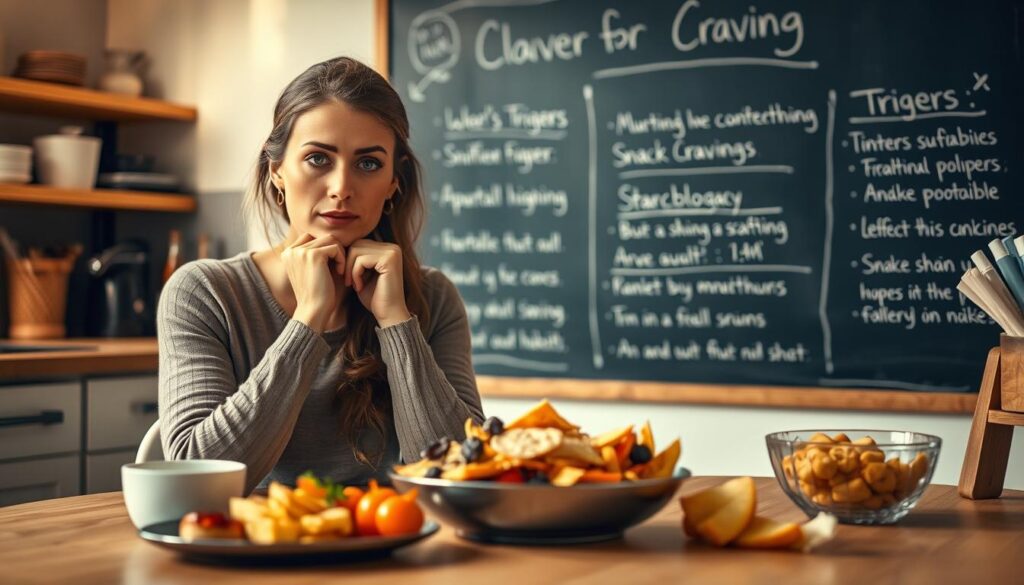
| Trigger Type | Common Cues | Body Signal | Quick Reframe | Action Using mindful snacking techniques |
|---|---|---|---|---|
| Emotional | Stress after emails, boredom at 3 p.m. | Urgent, specific food thought | Name the feeling out loud | 10 deep breaths, then fruit plus yogurt |
| Hormonal | Late luteal phase cravings | Lower fullness after meals | Plan ahead for the week | Add eggs or Greek yogurt at breakfast; pack almonds |
| Environmental | Open the candy jar, pastry smell | Salivation, attention locked on food | Change the view | Move snacks out of sight; keep cut veggies reachable |
| Physiological | Thirst, short sleep | Headache, low energy | Test the water first | Drink 12–16 oz water; take a 5‑minute fresh‑air break |
| Habit Loop | TV equals chips | Auto‑reach at the same time | Insert a pause | Measure a small portion, pair with a walk after the show |
Hydration, sleep, and stress: healthy lifestyle tips that curb snacking habits
Small choices every day shape our snacking habits. These tips help keep energy steady, support eating mindfully, and make fighting cravings easier.

Drink water before meals to reduce appetite and snack cravings
Drink a glass of water before eating. Thirst can feel like hunger. A quick drink helps you pause and think before grabbing snacks.
Use a water bottle from Hydro Flask or Nalgene. Drinking water all day helps control hunger and keeps eating in check.
Prioritize sleep to balance appetite hormones and reduce late-night urges
Try to sleep 7–9 hours a night. When we don’t sleep well, we crave quick energy foods.
Go to bed at the same time every night. Turn off screens and keep your room cool. These habits help avoid late-night cravings.
Fight stress with meditation, walks, or showers to distance yourself from cravings
Stress makes us want quick fixes. A short breathing exercise, a walk, or a shower can help. They give us space from eating on impulse.
Listen to a short playlist on Spotify or take a mindful walk. These activities help us fight cravings without just relying on willpower.
Main keyword: 5 ways to fight Struggling with Snack Cravings?
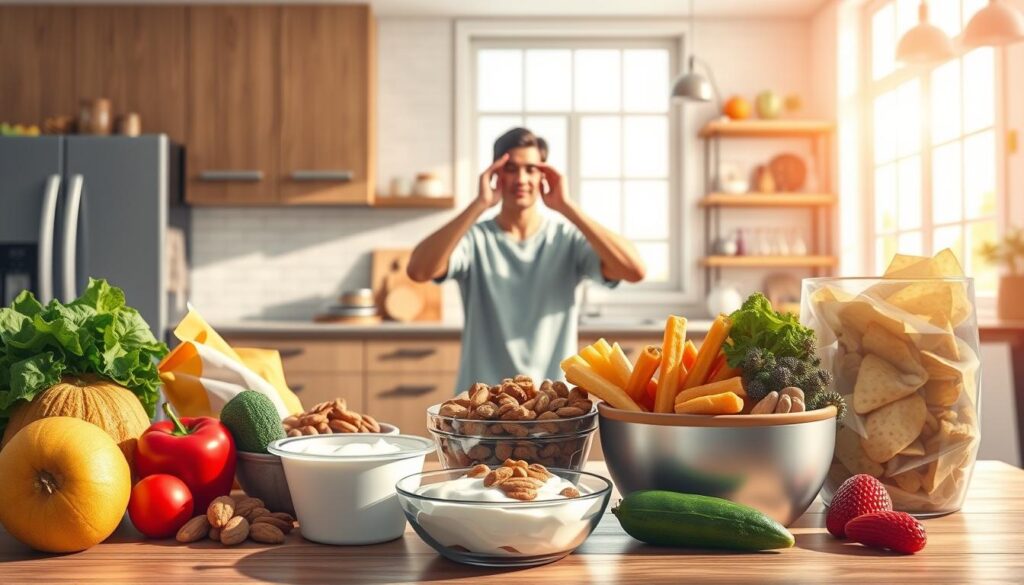
Here are five fast, science-backed moves for snack craving management that fit real life.
-
Prioritize protein. Make meals with eggs, Greek yogurt, chicken, tofu, or lentils. Protein keeps blood sugar steady and makes you feel full. It also helps you feel less like you need treats.
-
Hydrate on a schedule. Drink water before meals and carry a bottle. Sometimes, thirst feels like hunger. Drinking water helps you eat less and feel full.
-
Protect your sleep. Try to sleep 7–9 hours. Good sleep helps control hunger and stops late-night cravings. A bedtime routine helps you eat better the next day.
-
Defuse stress. Take a walk, get some sunlight, listen to music, or write for five minutes. These activities give you a natural high and help you avoid sugary snacks.
-
Plan swaps. Have healthy snacks ready like Greek yogurt with chia, pistachios, or hummus with carrots. Having these snacks ready helps you eat mindfully and manage cravings.
Use these 5 ways to fight struggling with snack cravings every day. Small, consistent choices make a big difference. Having healthy snacks and following mindful eating strategies helps a lot.
Protein-forward eating, meal planning, and mindful eating strategies
Eat steady food, not big spikes. Protein plates and planning help manage snacks. Mindful eating helps you feel full without feeling trapped.

Eat more protein to feel full longer and reduce the desire to snack
Start meals with 20–30 grams of protein. Choose Greek yogurt, eggs, tofu, chicken, tuna, or salmon. Add fiber like spinach, broccoli, lentils, or sweet potatoes to stay full.
For quick snacks, try cottage cheese with berries, a hard-boiled egg with cherry tomatoes, or mozzarella with an apple. These snacks keep your blood sugar steady and curb cravings.
Plan meals and keep healthy snack alternatives on hand
Plan meals with lean protein, veggies, whole grains, and healthy fats. Keep snacks like pistachios, chia-seed yogurt, hummus with broccoli, or roasted chickpeas ready. This helps with mindful eating when you’re hungry.
Make food ahead of time. Roast chicken, cook lentils, and prep veggies. A full fridge makes snacking easier and healthier, even on busy days.
Practice mindful eating to distinguish cravings from hunger
Take a minute to think. Drink water, check your hunger, and remember your last protein and fiber. If it’s a craving, have a small, planned snack. If it’s hunger, make a balanced mini meal.
Use simple tips: eat sitting down, plate your food, and turn off your phone. These habits help you eat mindfully, manage cravings, and avoid overeating.
- Protein picks: Greek yogurt, eggs, tofu, chicken, turkey, tuna, salmon
- Fiber boosts: Spinach, broccoli, lentils, chia, sweet potato, berries
- Smart add-ons: Olive oil, avocado, part-skim mozzarella, hummus
Healthy snack alternatives and mindful snacking techniques at home and work
Build snacks that pair protein, fiber, and healthy fats to steady energy and tame urges. This mix helps with overcoming cravings and smooths blood sugar swings that drive snacking habits.
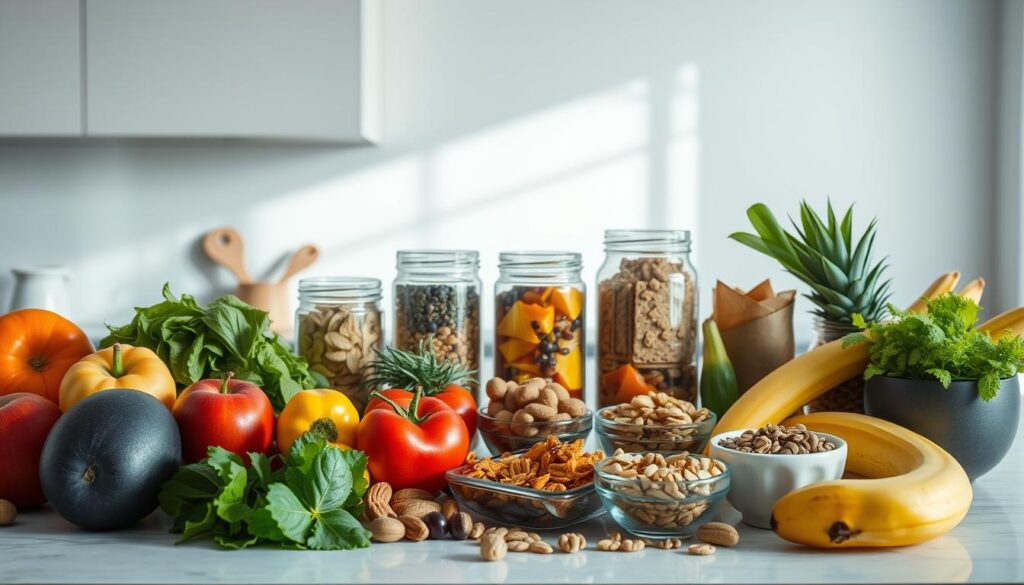
At home, keep Greek yogurt with chia seeds or raspberries. Chia adds filling fiber, and berries boost volume for few calories. For desk breaks, choose pistachios or mixed nuts. Their unsaturated fats, highlighted by the American Heart Association, support heart health and satiety.
Try avocado on whole-grain toast with eggs for a late-morning bite. The fat-fiber-protein trio sticks with you longer than a carb-only option. Hummus with broccoli or carrots is another simple win. Fiber and protein slow digestion and help mindful eating strategies work.
Lentil soup or a quinoa salad can double as mini meals when time is tight. Pulses and whole grains blunt post-meal glucose spikes, which helps with overcoming cravings later. If you want something sweet, go with a square of 70–85% dark chocolate and a date. Keep portions small and savor the taste.
- Pre-portion snacks into small containers or baggies.
- Use smaller bowls and sit at a table, not in front of screens.
- Check your mood first: are you stressed, bored, or thirsty?
- Set a 5–7-minute pause; many urges pass if you wait.
- Add magnesium-rich choices like spinach or almonds to support calm.
These mindful snacking techniques make healthy snack alternatives easy to reach and enjoy. Over time, mindful eating strategies reshape snacking habits at home and work without feeling deprived.
Behavior tweaks for overcoming cravings: choice architecture and short resets
Small changes in your space and daily routine can change your snacking habits quickly. Use snack craving management to pause, look at cues, and choose options that fit your day. These mindful snacking techniques work well with the healthy lifestyle tips you already use.
Give yourself a choice while considering consequences to reduce impulsive snacking
When a craving hits, name the trigger: time of day, place, mood, or stress. Ask, “What happens after I eat this now versus later?” Then choose plan a portion to enjoy mindfully after dinner, or swap in Greek yogurt with berries and nuts for protein and fiber.
This choice keeps you flexible, not rigid. It supports overcoming cravings without a rebound. It also trains snack craving management by linking urges to actions your control.
Use the cabinet method: keep treats out of sight and out of reach
Store sweets high and closed; keep fruit, roasted chickpeas, and seltzer front and center. Put a small bowl and measuring scoop near the pantry to pre-portion snacks. This setup lowers friction for mindful snacking techniques and raises it for impulse grabs.
Refresh the layout weekly. A tidy shelf and labeled bins guide snacking habits toward planned choices and align with healthy lifestyle tips you can sustain.
Try a 4–6 week reset for trigger foods to recalibrate taste buds
Pick one trigger food and pause it for 4–6 weeks while eating balanced meals. Use protein, fiber, and healthy fats at each meal to stay satisfied. Fill reward gaps with a walk in sunlight, a short playlist, journaling, or light strength work.
Track energy, sleep, and mood to see changes in urge intensity. As taste buds reset, reintroduce a small portion mindfully and keep your snack craving management plan in place.
| Behavior Tactic | Concrete Step | Cue Addressed | Why It Helps |
|---|---|---|---|
| Choice Architecture | Schedule a portion for later or swap in a protein-fiber snack | Stress, boredom, timing | Prevents all-or-nothing thinking and supports overcoming cravings |
| Cabinet Method | Place treats high; put fruit and nuts at eye level | Visibility, reach | Reduces impulse picks and reshapes snacking habits |
| 4–6 Week Reset | Pause one trigger food; keep balanced meals | Hyperpalatable pull | Recalibrates taste and improves snack craving management |
| Dopamine Alternatives | Sunlight walk, music, journaling | Reward seeking | Mindful snacking techniques without food reliance |
| Routine Supports | Consistent sleep and short stress breaks | Fatigue, tension | Reinforces healthy lifestyle tips that stabilize appetite |
Conclusion
Small choices every day can make a big difference. To fight snack cravings, try these five steps: make protein the main food, drink water before meals, sleep 7–9 hours, manage stress, and choose healthy snacks.
Also, use mindful eating to spot why you crave snacks. A quick note or pause can help you know if you’re hungry. This way, you can stop cravings without feeling left out.
Protein keeps your energy and mood up, and water stops you from thinking you’re hungry when you’re not. Good sleep helps your body know when it’s hungry.
Moving, listening to music, getting sunlight, and spending time with friends can make you feel better than sugar does. Plan your meals with protein, healthy fats, and fiber. This follows U.S. nutrition advice.
Make your kitchen ready for healthy choices. Use short waits to get past cravings. If cravings are too strong or lead to bingeing, talk to a doctor or dietitian.
Begin with one small change today, like drinking water, eating protein, or going for a walk. With regular, easy habits, you can beat cravings and live a healthier life.
FAQ
What are the 5 ways to fight struggling with snack cravings?
How common are cravings, and why do they happen?
How do cravings differ from true hunger?
Why does processed sugar make me want to snack more?
What are the best healthy snack alternatives when cravings hit?
How much protein should I aim for to manage snacking habits?
Can hydration reduce cravings?
How does sleep affect snack craving management?
What stress relief methods help with overcoming cravings?
How can I plan to reduce impulsive snacking?
What are mindful snacking techniques I can use right now?
Do hormones affect cravings during the menstrual cycle?
Are magnesium or adaptogens helpful for snack cravings?
What if I want sweets—should I avoid them completely?
What is a 4–6 week “reset,” and who should try it?
Which fats support better snacking habits?
How do I make my home and office support snack craving management?
When should I seek professional help for cravings?
Discover more from Cozy Corner
Subscribe to get the latest posts sent to your email.