12 Ways to Reduce Stress with Food & Exercise
Stress is a part of life, but we can manage it. Eating right and exercising help a lot. Some foods help our bodies deal with stress better. Exercise also helps us manage stress well.
Eating well and moving more is important. A good diet helps our body and mind. Exercise makes us feel good by releasing happy chemicals.
- Incorporate leafy greens: Leafy greens are full of vitamins and minerals that help with stress.
- Omega-3-rich foods: Foods like salmon and chia seeds are good for our minds.
- Magnesium-rich foods: Magnesium calms our nerves. Almonds and spinach are great sources.
- Get moving with regular exercise: Activities like jogging, aerobics, or a daily walk help manage stress.
- Practice mindfulness: Yoga and meditation with exercise keep us balanced.
Combining healthy eating and regular exercise is key. The right foods and staying active are vital for managing stress.
Stress-Reducing Foods to Incorporate into Your Diet
Managing stress is key for feeling good. Eating healthy can help you handle daily stress better. Adding certain foods to your diet can make you feel calmer and improve your mood. Let’s look at some foods that help with this.
Omega-3 Rich Foods
Omega-3 foods are great for your brain and mood. Salmon, flaxseeds, and walnuts help your brain and reduce inflammation. Eating these foods supports your heart and helps with stress.

| Food | Omega-3 Content | Benefits |
|---|---|---|
| Salmon | 2,150 mg per 100g | Reduces inflammation, boosts mood |
| Flaxseeds | 22,800 mg per 100g | Regulates neurotransmitters |
| Walnuts | 9,080 mg per 100g | Supports heart health, manages stress |
Magnesium-Rich Foods
Foods like spinach, avocado, and dark chocolate help with stress. Magnesium is important for nerves and easing stress. Eating these foods can help you relax and feel better mentally.
| Food | Magnesium Content | Benefits |
|---|---|---|
| Spinach | 79 mg per 100g | Maintains nerve function |
| Avocado | 29 mg per 100g | Promotes relaxation |
| Dark Chocolate | 228 mg per 100g | Reduces stress symptoms |
Exercise Routines for Stress Relief
Doing regular physical activity makes you feel better both inside and out. It’s a great way to fight stress and feel happier. Let’s look at two key types: aerobic exercise and strength training.
Aerobic Exercise
Aerobic exercise, or “cardio,” includes jogging, swimming, and cycling. These activities make your heartbeat faster and release happy hormones. They help you feel better and less anxious.
They also make your heart and body stronger. This is good for your health and fitness.
“Exercise is a natural way to alleviate stress. Elevating the heart rate through aerobic activities releases endorphins, often termed ‘happy hormones,’ which are invaluable in coping with stress,” says Dr. Michael Otto, a professor of psychology at Boston University.

Strength Training
Strength training uses weights or bands to build muscle. It makes your muscles stronger and more toned. It also boosts your self-confidence and helps you deal with stress.
- Enhances muscle strength and aesthetics
- Boosts confidence and mental resilience
- Helps burn away accumulated stress through physical effort
Doing both aerobic exercise and strength training keeps you healthy. These routines are key to a happy and healthy life. They help reduce stress and improve your well-being.
Mindfulness Practices to Complement Diet and Exercise
Mindfulness practices are great for your diet and exercise. They help you feel better by connecting your mind and body. Try meditation and journaling to reduce stress and feel good.
Meditation
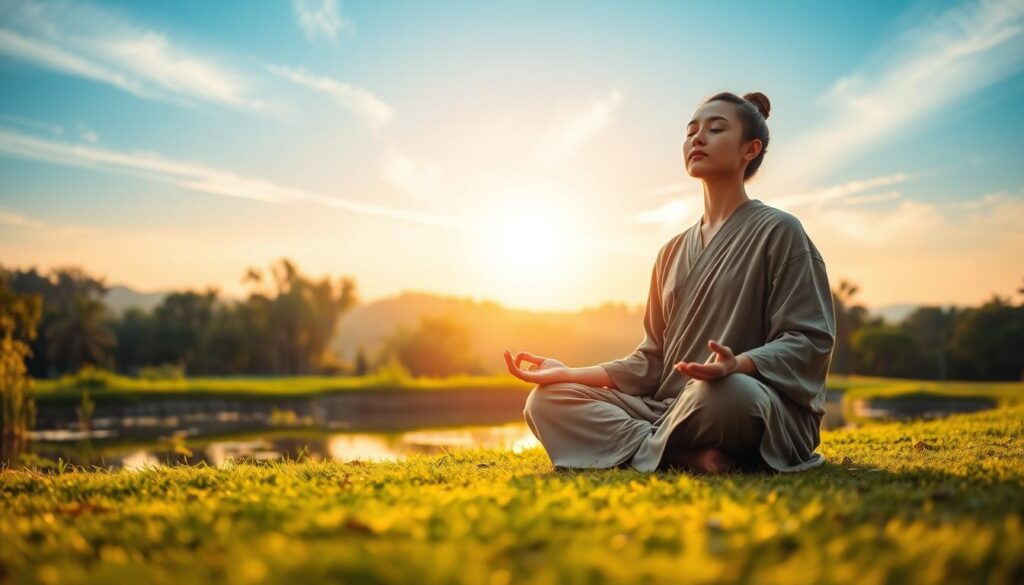
Meditation means sitting quietly and focusing on now. You pay attention to your thoughts and how you feel. It helps you feel calm and clear.
Journaling
Journaling is good for stress, too. It’s about writing down your thoughts and feelings. This helps you understand yourself better and manage stress.
Meditation and journaling work well together to manage stress. Here’s how they help:
| Practice | Stress Reduction Techniques | Benefits |
|---|---|---|
| Meditation | Sitting quietly, focusing on breathing | Calms the mind, enhances focus |
| Journaling | Writing thoughts and emotions | Increases self-awareness, processes stressors |
Self-Care Activities for Holistic Stress Management
Adding self-care to your day helps manage stress. It keeps your body, mind, and heart in balance. Getting quality sleep and doing stress management hobbies are key. They bring joy and calm.
Quality Sleep
Good sleep is key to stress control. Bad sleep makes you feel tired and moody. Create a calm bedtime routine, like reading or a warm bath.
Make your sleep space peaceful. A rested body and mind can handle stress better.
Hobbies
Doing stress management hobbies is vital. Hobbies like gardening or playing music distract from stress. They make you happy and fulfilled.
Choose hobbies that make you happy. They boost your mental health and balance your life.

Self-care, like hobbies and sleep, helps manage stress. Find what works for you and do it often.
12 Ways to Reduce Stress with Food and Exercise
Combining diet and exercise is a great way to manage stress. Here are 12 ways to reduce stress with food and exercise that you can do every day.
- Eat foods that fight inflammation, like blueberries, salmon, and leafy greens. They help lower stress.
- Do regular cardio, like jogging or swimming. It makes you feel good and less stressed.
- Eat mindfully. Enjoy each bite and listen to your body’s hunger and fullness.
- Try yoga. It’s a mix of gentle exercise and mindfulness that relaxes you.
- Do strength training to build muscle and feel happier. It releases good hormones.
- Drink lots of water. It’s key for your body and helps reduce stress.
- Drink green tea. It has L-theanine, which helps you relax and feel less anxious.
- Do deep breathing exercises. They help you breathe better and feel calm.
- Stretch often during the day. It helps fight the bad effects of sitting too long.
- Eat foods rich in magnesium, like nuts and dark chocolate. They help your muscles and nerves.
- Listen to calming music while you eat or exercise. It makes you relax more.
- Make a meal plan with lots of healthy foods. It helps you stay healthy and manage stress well.
Conclusion
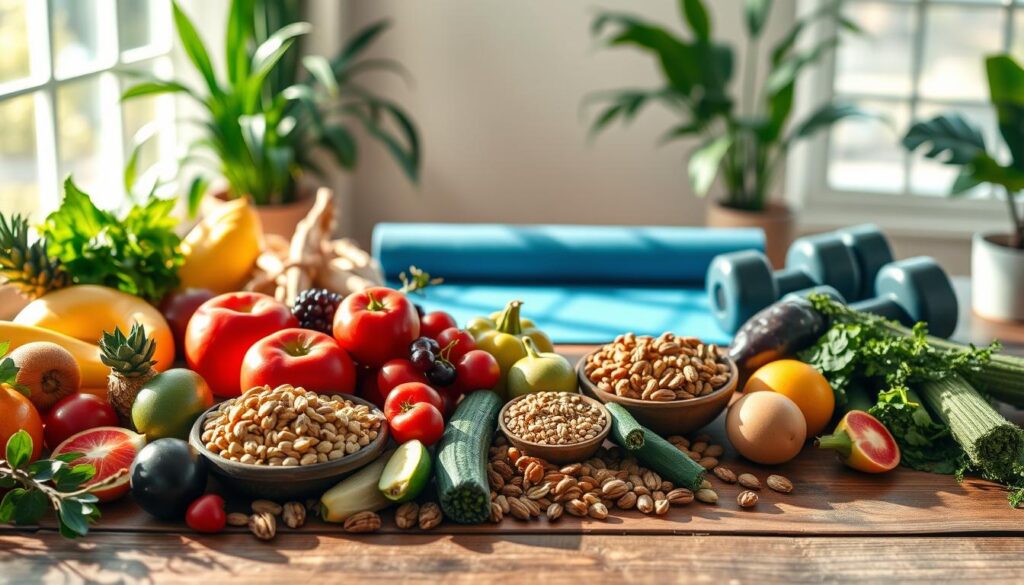
Managing stress well means knowing how our body and stress levels work together. Eating foods that help reduce stress and exercising regularly are key. Foods rich in Omega-3 and magnesium, along with exercise, are very important for feeling good.
Mindfulness practices like meditation and journaling also help a lot. They make our diet and exercise even better. Taking care of ourselves, like sleeping well and enjoying hobbies, is also important.
Using a holistic approach to stress helps us feel better and live a balanced life. It makes us more productive and happier. By doing these things every day, we can handle life’s ups and downs better.
FAQ
What are some effective stress management strategies?
How do Omega-3-rich foods help with stress management?
Which magnesium-rich foods are beneficial for stress relief?
What types of exercise are best for stress relief?
How does aerobic exercise alleviate stress?
Why is strength training helpful for stress management?
What role does mindfulness play in stress reduction?
How does meditation help reduce stress?
Can journaling help with stress management?
How important is quality sleep in managing stress?
Why are hobbies important for stress relief?
What is a holistic approach to stress management?
Discover more from Cozy Corner
Subscribe to get the latest posts sent to your email.